











Creator Interview

-Graphic Designer-
Distilling Ideas
To Their Essence
From the Tiffany and Nike collaboration to creative direction for Shiseido and ELLE magazine,
Ruba Abu-Nimah moves fluidly across worlds,
finding connections and shaping them into new narratives.
Her work continues to bring new context to history.
What defines her philosophy of design?
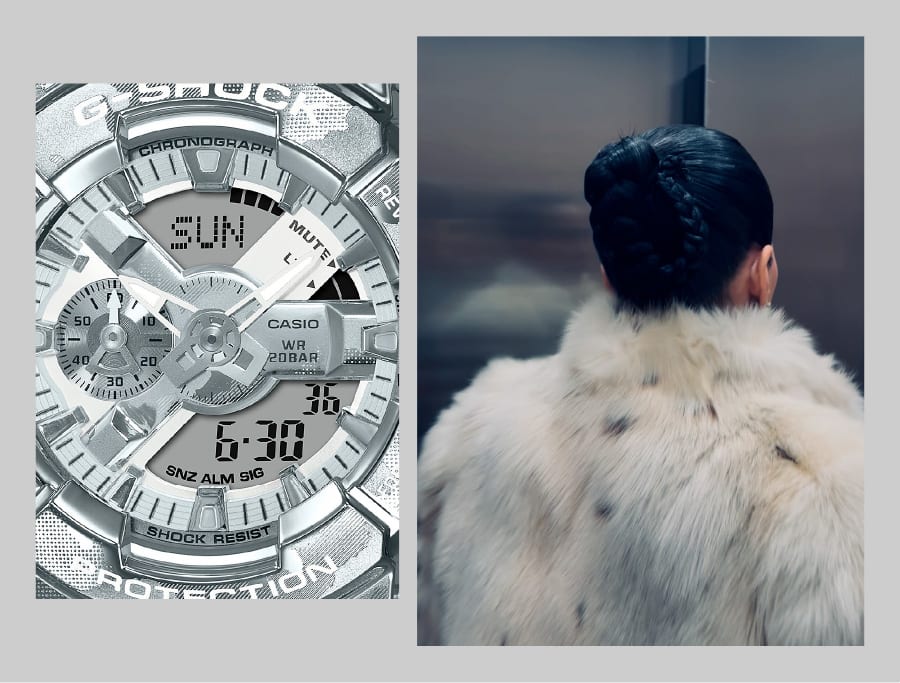
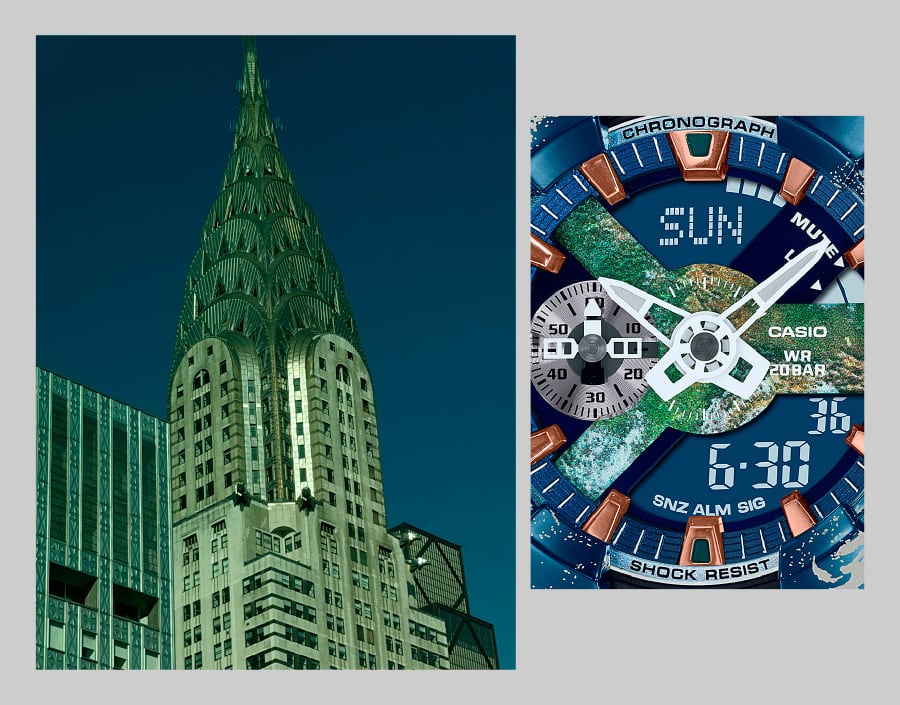

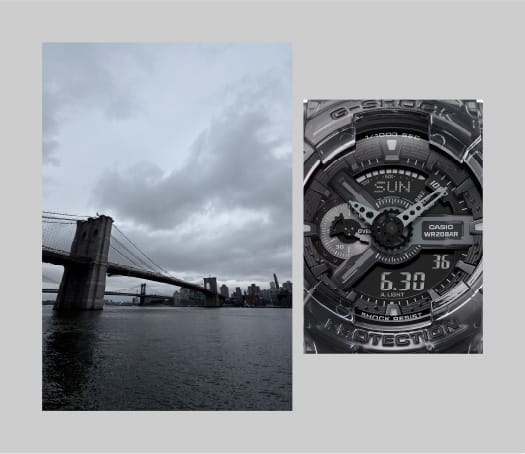
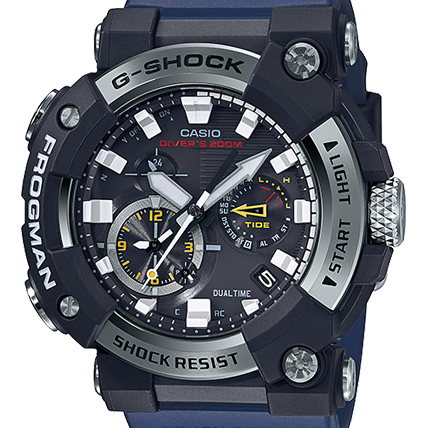
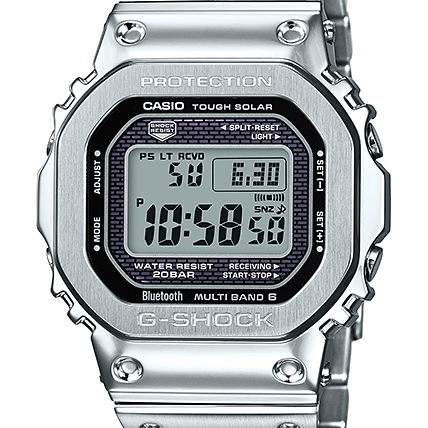
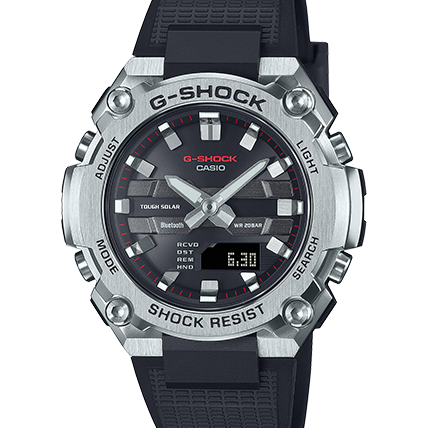
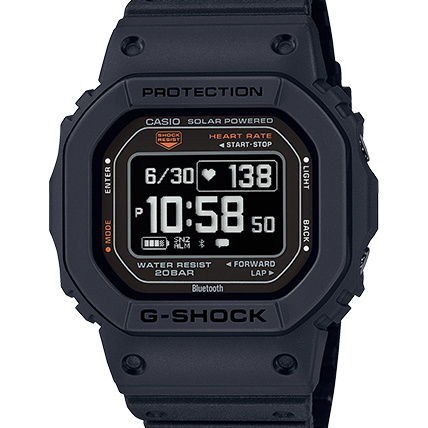
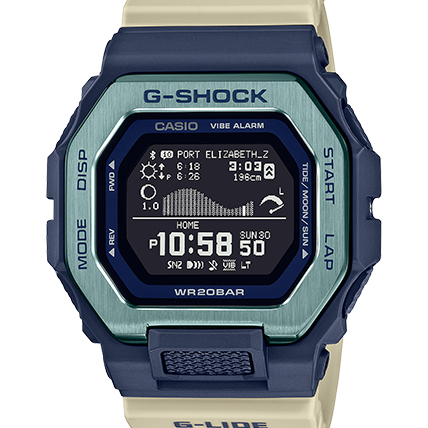
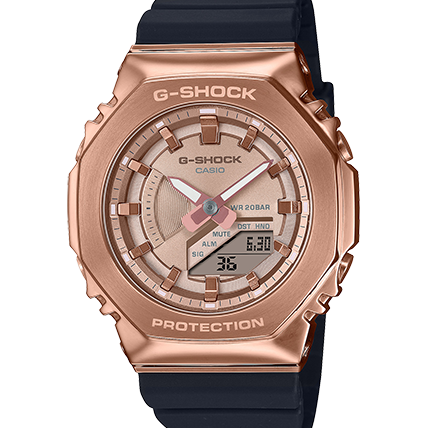
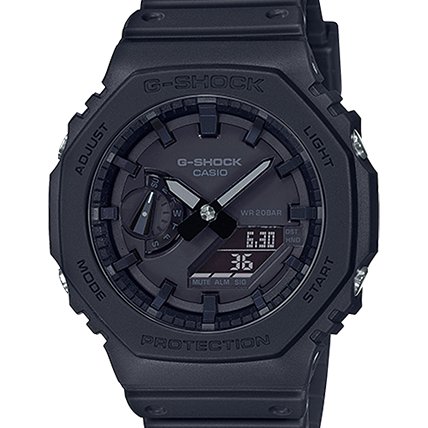
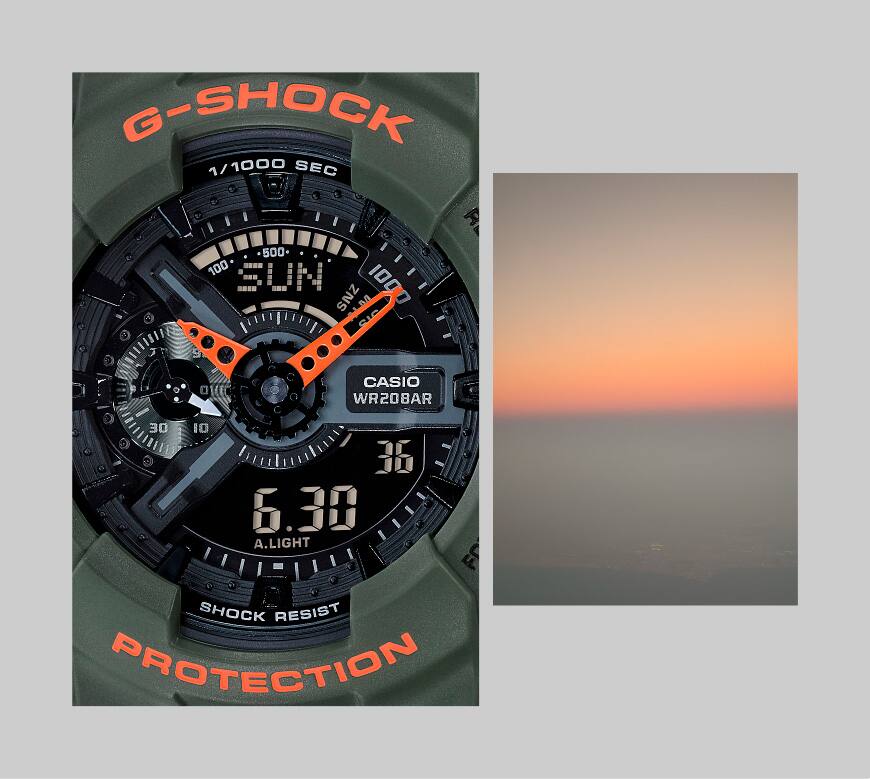
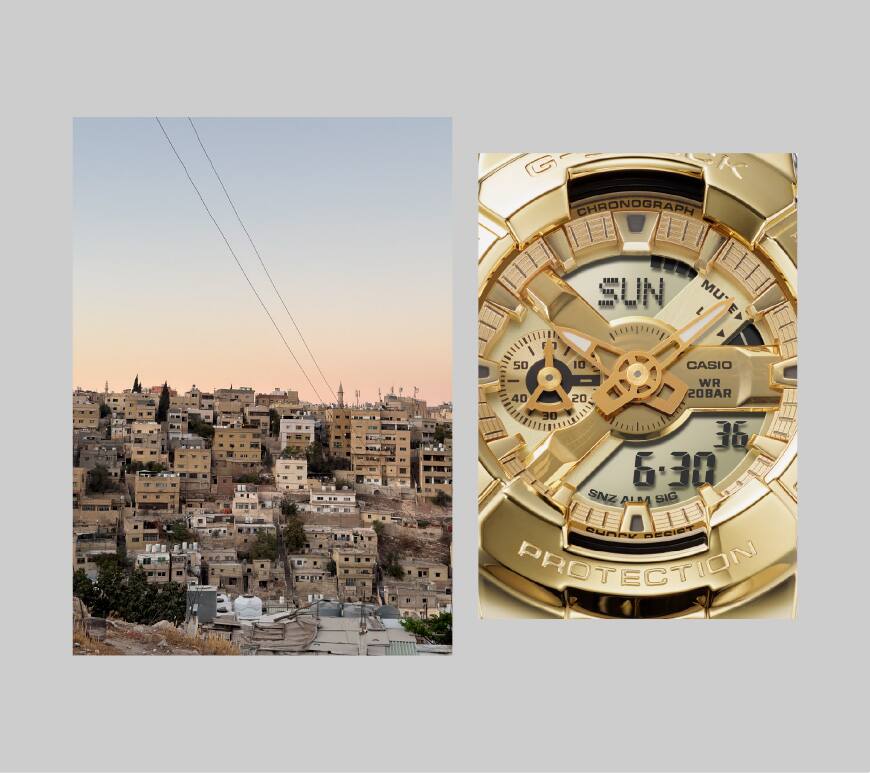
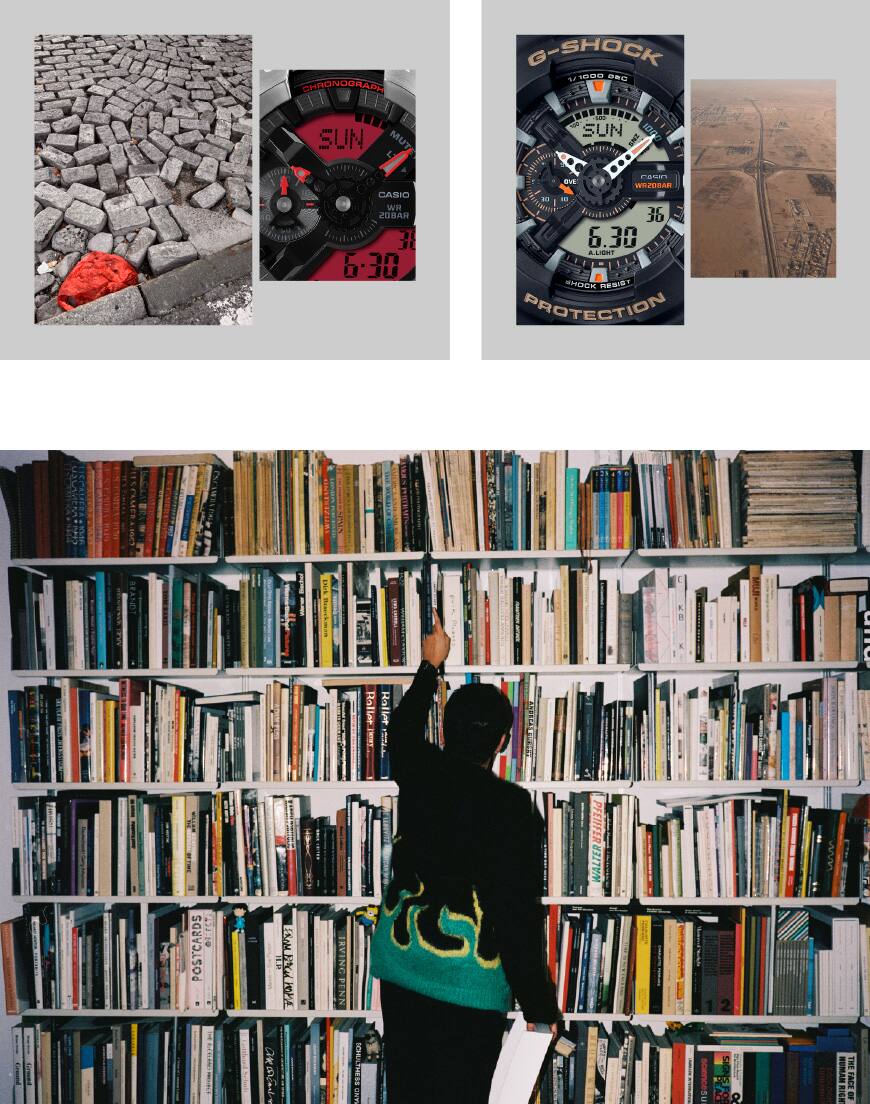
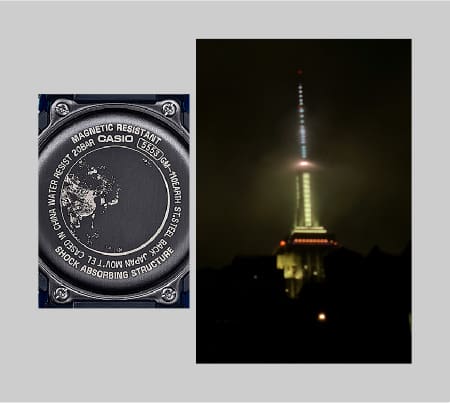
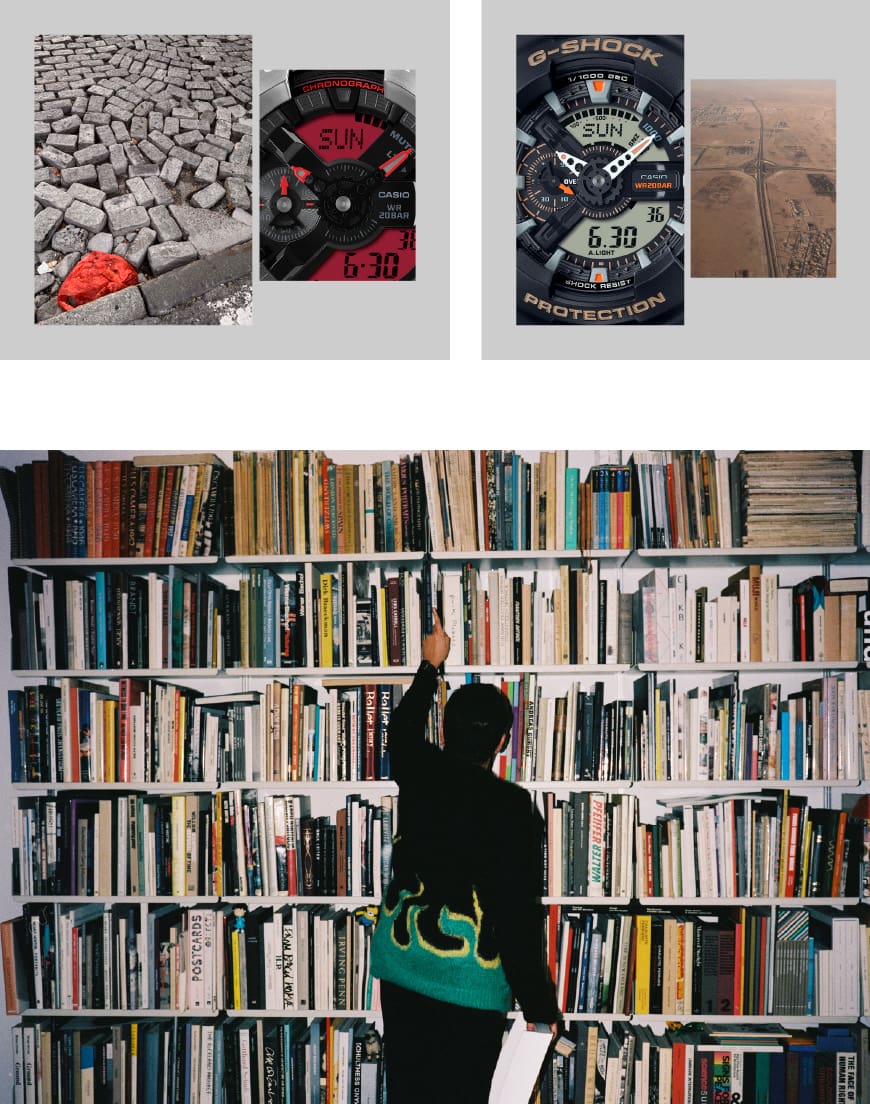
Artwork composed like a magazine spread, pairing the GA-110’s distinctive colorways and details with images of landscapes and everyday scenes that echo them. These combinations create new narratives, from the Chrysler Building to blue skies over snowy mountains and scenes from the street; the images reflect Abu-Nimah’s daily life and travels while also connecting to the viewer’s own memories. The work reflects Abu-Nimah’s editorial design background at its core, with nine pieces spread across the pages, each revealing its own story.
Interview
The Message
At The Core
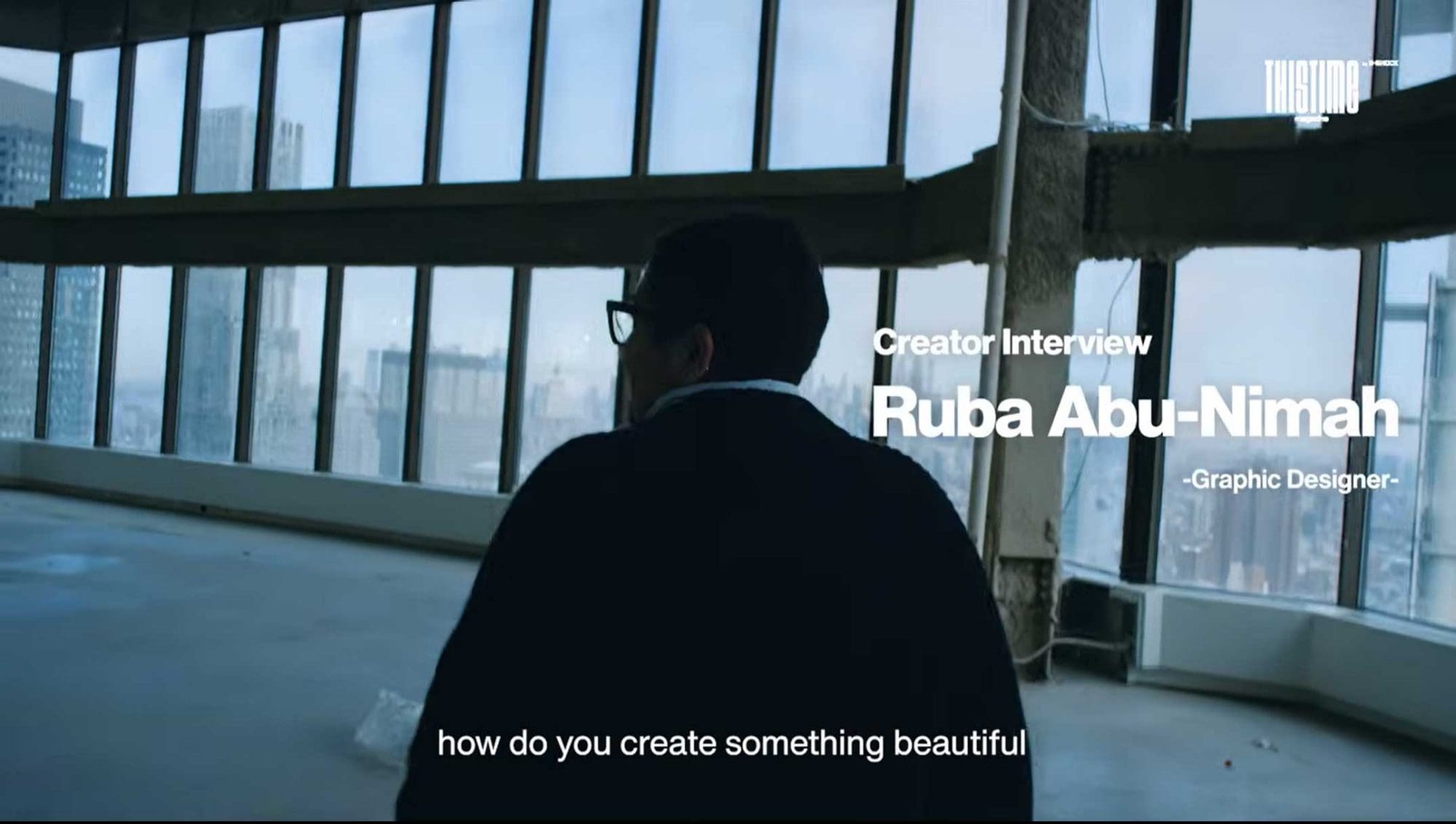
New York City, where some of the world’s most influential culture, art, and business are defined. The city is more compact than it seems, roughly 20km long and about 4km across at its widest, making it all the more competitive to build a life and work here. Graphic designer Ruba Abu-Nimah has been based in New York for over two decades since relocating from Europe, leading creative direction for some of the world’s most recognized brands. One of her most defining projects in recent years was her role as Creative Director of Tiffany, the historic jewelry house founded in New York in 1837. By incorporating elements of New York street culture such as skateboarding, BMX, and graffiti into its visual identity, and extending that vision into a collaboration with Nike, she reshaped the brand’s narrative. Working from New York, Abu-Nimah continues to develop a design language rooted in message and meaning. Here, we spoke with Abu-Nimah about her approach.
―― Please tell us about what you do.
I’m a graphic designer based in New York, working across fashion, beauty, and culture. I also design books and have worked closely with Gerhard Steidl in Germany, who is known for producing some of the most beautifully crafted books in the world. I’ve been working in design for a long time, and that’s always been at the center of my work. I started in print and have seen the shift into digital over time. In publishing, I worked as Creative Director at ELLE magazine, and I also spent several years living and working in Japan with Shiseido. I later took on the role of Creative Director at Tiffany as well. My work spans a wide range of fields, but at its core, what I truly love and do best is simply designing.
―― What is it about design that fascinates you?
I’m interested in every part of design. Even the way I talk to people or what I share on social media connects back to it. My interests include product design, architecture, print, and more. I’m especially drawn to the craft side of it, how things are actually made. Perspective is important not just in design, but in how you approach life. In my home, everything has been carefully chosen. I’m always looking for things that are both beautiful and functional. I also collect images and visuals. There’s a reason people say seeing is believing. Words matter, but photography, art, and painting come from a different kind of instinct, and encountering that level of expression is always inspiring. Collecting, studying, and experiencing those images are essential to how I design.
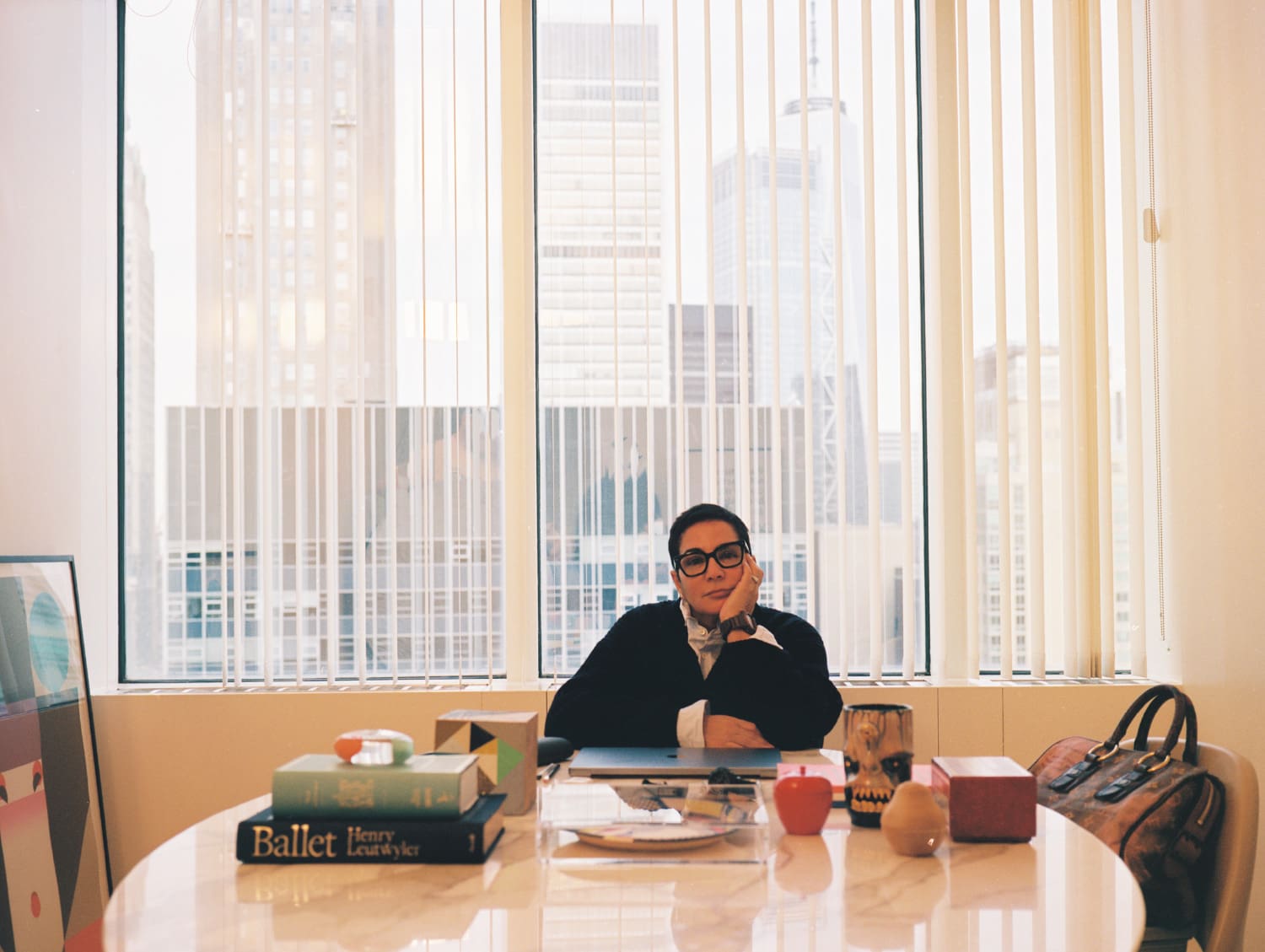
A space at WSA in New York, where Abu-Nimah recently moved her office. The building brings together creators across design, fashion, food, and wellness, with each room serving as its own office or studio. Even passing conversations in the hallways can spark new ideas, making it one of the most dynamic creative environments in the world.
――What is your design philosophy?
Less is More. I like when something is reduced to its essence. The approach can be simple, but the message should be complex. That’s the balance I’m always trying to find. It’s not easy, but that’s what keeps it interesting. Saint-Exupéry once said, “Perfection is achieved, not when there is nothing more to add, but when there is nothing left to take away.” That idea really resonates with me.
―― Your work often brings together unexpected elements to create something powerful. How do you approach that balance?
My work goes beyond graphic design as a basic communication tool. At its core, it’s about conveying a message. I use different forms of media and bring them together in ways that feel meaningful, sometimes slightly disruptive. The challenge is finding the right balance between all the elements involved. At the same time, I’m always thinking about how to make people want to buy a product in a new way.
―― How do you spend your time when developing ideas?
I live in New York, and there’s always inspiration here. It’s been a cultural center of the world since the early 1950s, and people come here with a purpose. Even just walking through the city, it feels like inspiration finds you. At the same time, it can be a tough place that really tests you. But if you keep going and find a way to stay, it gives something back in a beautiful way. I recently moved my office to WSA, and that’s been a special environment. It’s a place that brings together people working across fashion, art, food, and more, all part of the current New York scene. Being surrounded by people with a similar mindset makes a big difference. Whether it’s someone I’ve known for years or someone I just met, it’s inspiring to pass people in the hallway who are all working on something creative.
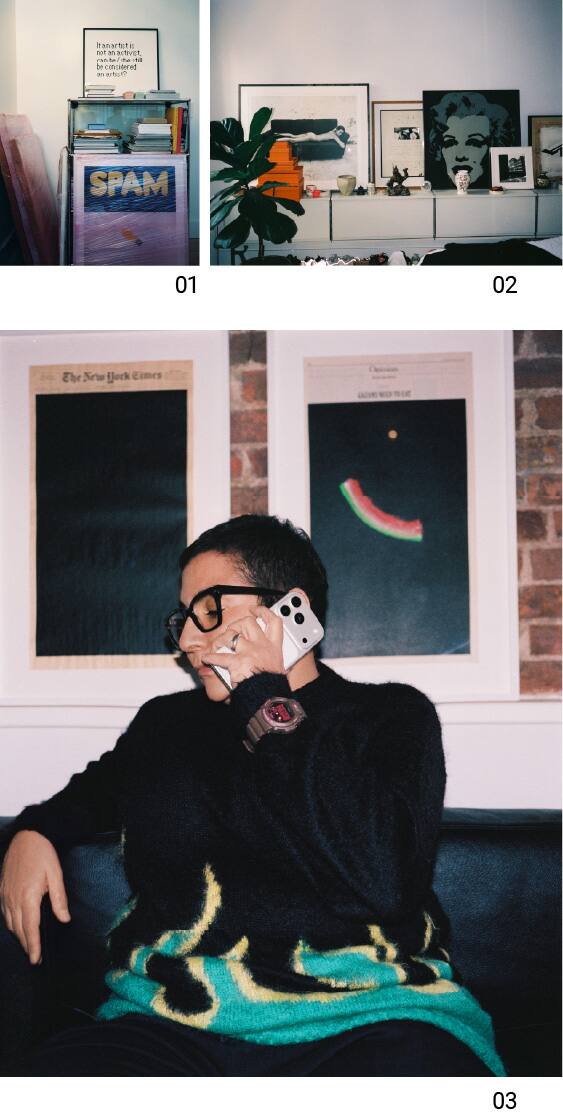
01.
A section of Abu-Nimah’s office at WSA. Editorial and book design form the foundation of her career, and books and magazines are a constant part of her daily life. On the top shelf is a piece featuring a message by Chinese contemporary artist Ai Weiwei.
02.
Abu-Nimah’s home. A Kate Moss print by longtime friend and collaborator, photographer Mario Sorrenti, sits alongside works by Andy Warhol and Hermès orange boxes, with rows of sneakers lined up at the base of the shelves. That sense of balance is what keeps her at the top.
03.
The GSHOCK Abu-Nimah is wearing is a collaboration with Hardies Hardware, led by pro skateboarder and longtime friend Tyshawn Jones, who also appears in this issue of THISTIME magazine. Behind her is a work by New Yorkbased Japanese artist Sho Shibuya. She is surrounded by the works of friends, and their influence is always part of her world.
The GSHOCK Abu-Nimah is wearing is a collaboration with Hardies Hardware, led by pro skateboarder and longtime friend Tyshawn Jones, who also appears in this issue of THISTIME magazine. Behind her is a work by New Yorkbased Japanese artist Sho Shibuya. She is surrounded by the works of friends, and their influence is always part of her world.
――What do you think makes something timeless?
It’s something that continues to resonate with people. It doesn’t have to be tied to trends. Trends can move things forward, but something timeless still holds meaning years later. Ideally it’s visually beautiful too, but more important than that is the message underneath. Even in client work, I’m always thinking about how to express the core philosophy behind it. For me, the challenge is always how to communicate something meaningful.
―― You lived in Japan for about two years. What did you take away from Japanese culture and its sensibility?
Japan offered a very different way of seeing things, more spiritual, philosophical, and rooted in craft. I learned the importance of making with purpose, avoiding waste, and thinking in terms of longevity. In Japan, some things are made to last for hundreds or even thousands of years, and that sense of meaning is what makes them timeless. When I worked at Shiseido, we spent a lot of time questioning whether a product truly needed to exist. That focus on meaning stayed with me. Even the sense of what beauty is feels different, less about surface, more about depth, and it still shapes how I work today.
―― Your Instagram often features watches. What do they mean to you?
Watches carry a strong sense of craft. Over the past few decades, they’ve become major status symbols. What was once purely functional is now also seen as jewelry, and even as a sign of intelligence and taste. I’m especially drawn to industrial design, and I see watches in the same category as cars or coffee makers. As Dieter Rams’s work shows, good design stands the test of time. For me, a watch is a constant reminder of what really matters in design. Creating one involves an incredible number of processes and components, on par with making a car or a couture garment. They’re not disposable. If cared for properly, they’re something you can keep for a lifetime.
――What does toughness mean to you?
Living in New York. You have to be tough. You really have to be strong. You can’t afford to be breaking down.
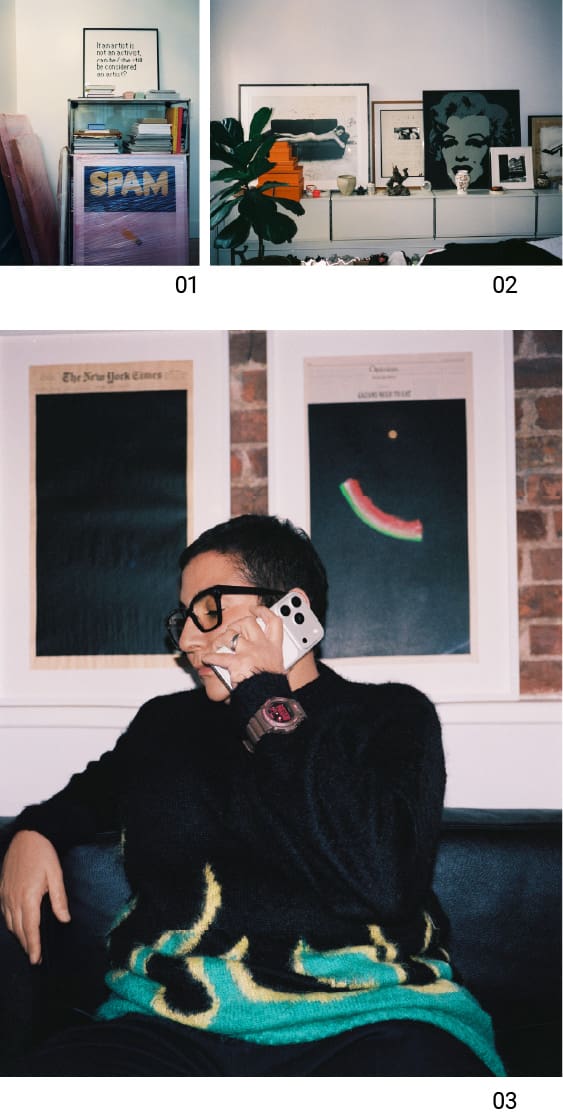
01
A section of Abu-Nimah’s office at WSA. Editorial and book design form the foundation of her career, and books and magazines are a constant part of her daily life. On the top shelf is a piece featuring a message by Chinese contemporary artist Ai Weiwei.
02
Abu-Nimah’s home. A Kate Moss print by longtime friend and collaborator, photographer Mario Sorrenti, sits alongside works by Andy Warhol and Hermès orange boxes, with rows of sneakers lined up at the base of the shelves. That sense of balance is what keeps her at the top.
03
The GSHOCK Abu-Nimah is wearing is a collaboration with Hardies Hardware, led by pro skateboarder and longtime friend Tyshawn Jones, who also appears in this issue of THISTIME magazine. Behind her is a work by New Yorkbased Japanese artist Sho Shibuya. She is surrounded by the works of friends, and their influence is always part of her world.
The GSHOCK Abu-Nimah is wearing is a collaboration with Hardies Hardware, led by pro skateboarder and longtime friend Tyshawn Jones, who also appears in this issue of THISTIME magazine. Behind her is a work by New Yorkbased Japanese artist Sho Shibuya. She is surrounded by the works of friends, and their influence is always part of her world.
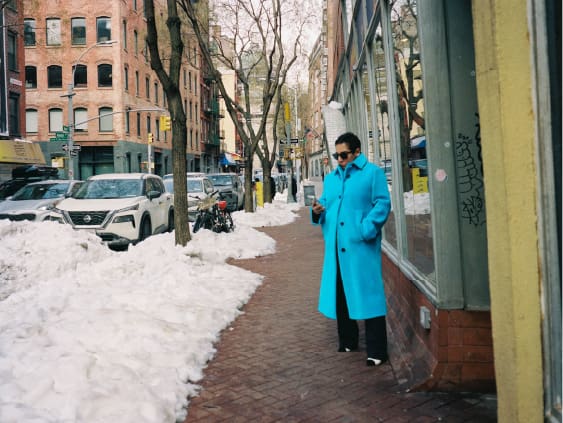
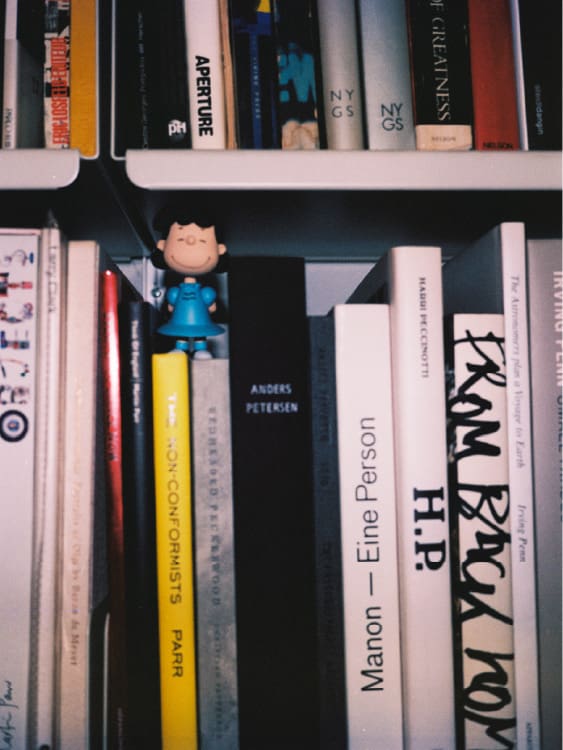
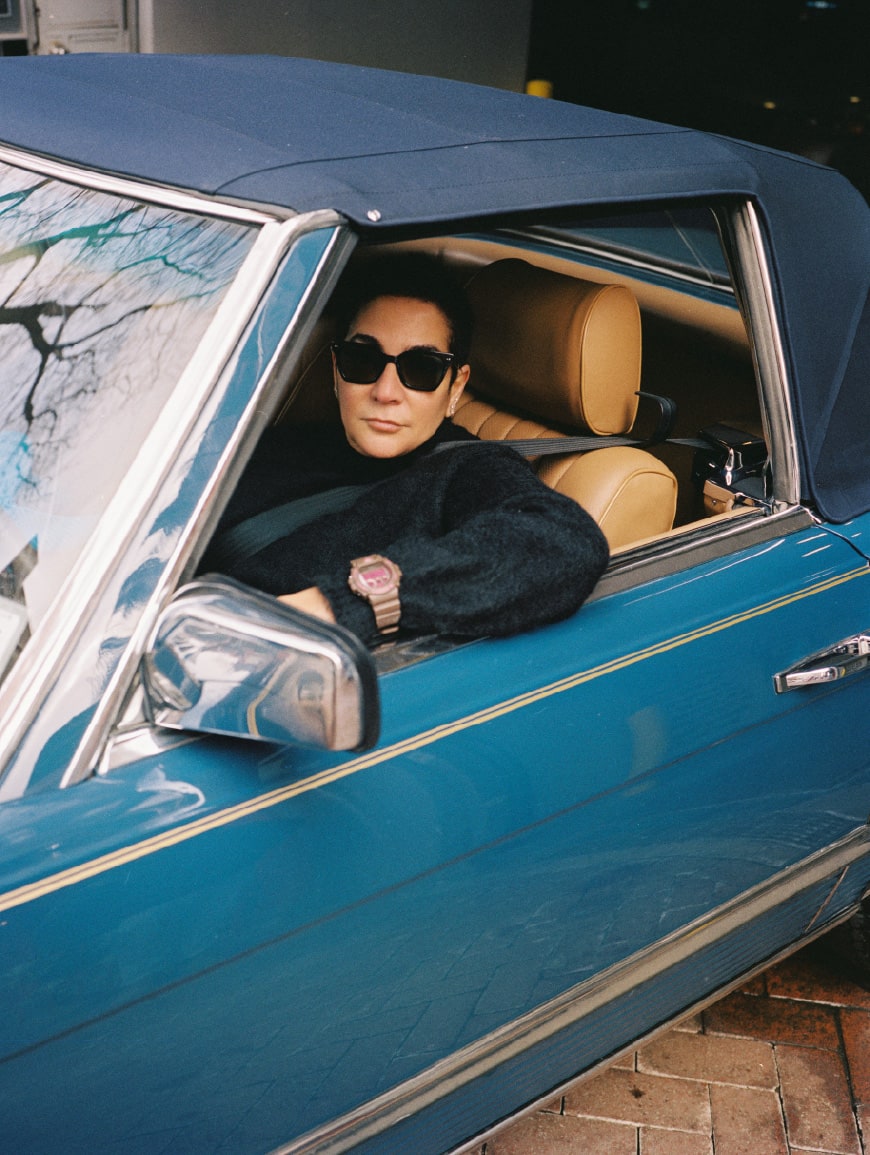
From her blue Mercedes-Benz 380SL to a blue coat, along with a Lucy figurine from Peanuts that she also uses as her Instagram icon, Abu-Nimah’s commitment to what she loves consistently reflects her design philosophy of distilling things to their very essence.
Profile.
Ruba Abu-Nimah
Ruba Abu-Nimah was born in Amman, Jordan and began her career as a print designer. She has since held roles as creative director for Revlon, Shiseido, ELLE magazine, and Tiffany. With a deep understanding of fashion, beauty, and culture, her work is defined by the unexpected combinations she brings together, creating something new and dynamic.
Instagram. @ruba
Photography. Bladimir Corniel
Interview. Shimpei Nakagawa
Edit & Text. Yutaro Okamoto_THOUSAND
Tokyo

Los Angeles

Paris

New York


THISTIME MAGAZINE
Creator Interview