











Creator Interview
Eric Haze
A Street Art Legend
With Deep Ties To G-SHOCK
Emerging from the early days of the street art movement in the 1970s, Eric Haze has had a major influence on both the art world and fashion. A true living legend, he has built a long relationship with G-SHOCK through collaboration models and anniversary logos. For our New York feature, he is someone we simply couldn’t leave out. We visited Haze at his studio in Brooklyn to talk about the creativity that continues to drive his work.

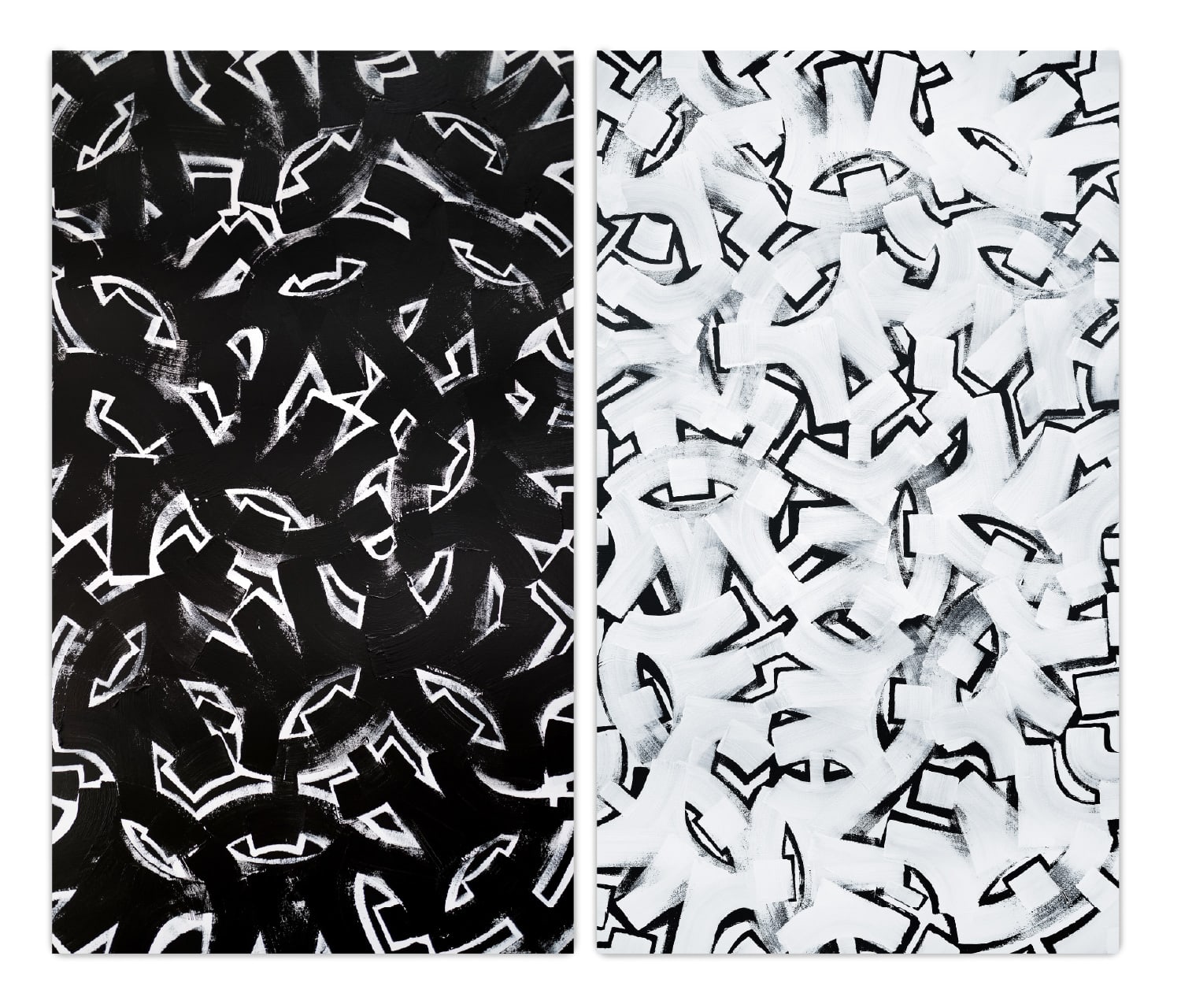
Ghosts of Kings 1
83 × 48 in
acrylic on canvas
2025
Ghosts of Kings 2
83 × 48 in
acrylic on canvas
2025
The latest work in the abstract black-and-white style that has become synonymous with Eric Haze. These two pieces were exhibited at “Beyond The Streets,” held in Paris this summer. Rendered as contrasting compositions, they form a paired set of works.
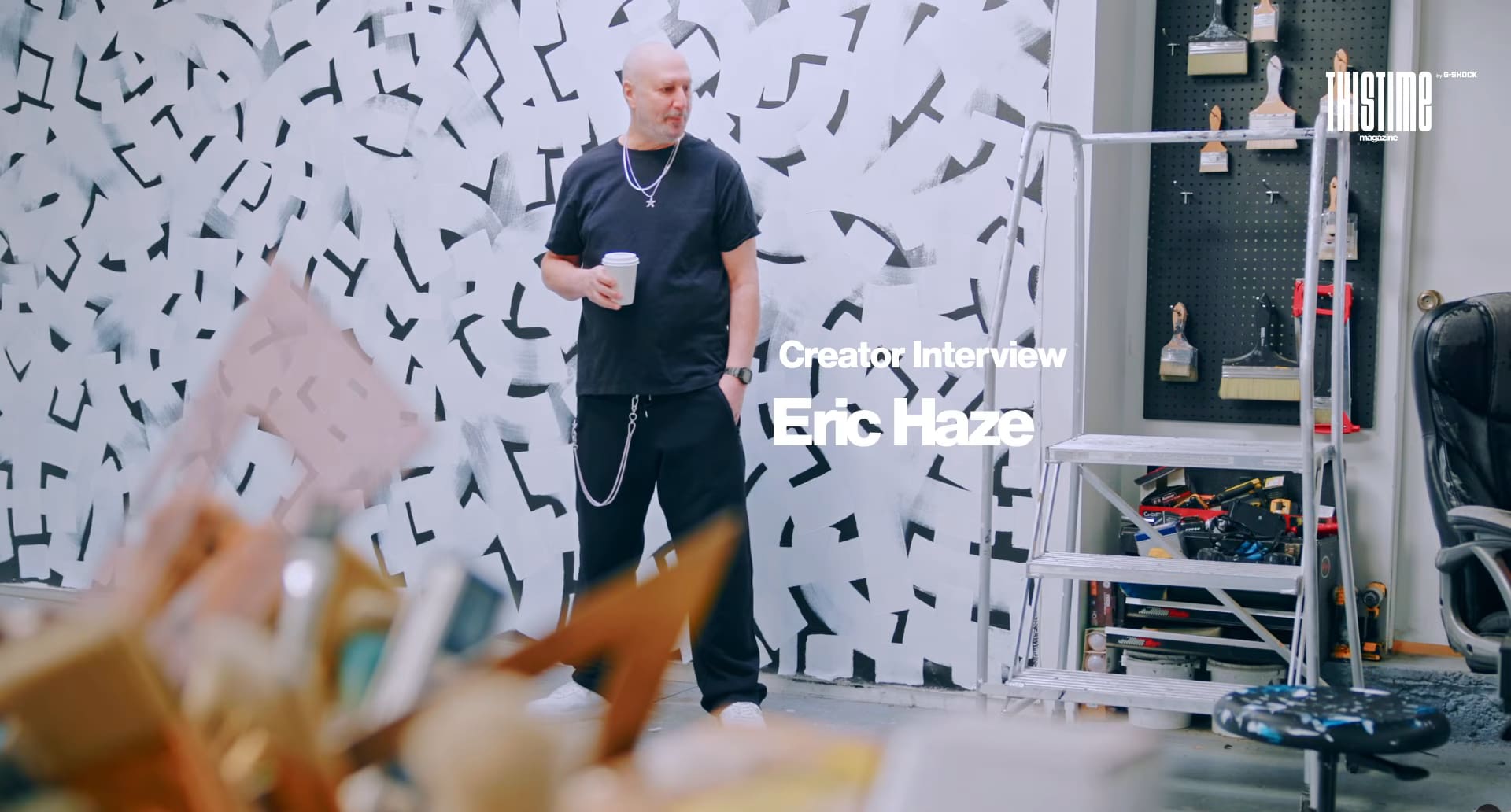
Interview
The Energy Of New York Never Changes
―― Since you began working in the 1970s, how has the creative energy of New York changed?
New York is my home. It’s the place that shaped me both as a person and as an artist. The energy of the city itself hasn’t changed that much, but the landscape, the technology, and the community have changed quite a bit. People now come from all over the world, which has made my connection with longtime New Yorkers feel even more important. But in the end, what drives my creativity is the same New York energy that has never really changed.
―― What does that New York energy feel like?
The moment you open the door and step outside, it feels like life immediately starts moving. There are people everywhere, constant motion, and something always happening. And wherever you look in the city, you can sense its history. There aren’t many places with that kind of speed and energy. Tokyo, Hong Kong, and Paris have a similar feeling, but LA and Miami are much more relaxed. In New York, no one can afford to waste time. Life here is tough and expensive, which makes you want each day to mean something. When I go home at night, I want to feel like I gained something that made the day’s effort worthwhile.
―― What makes New York special compared to other cities?
For me, it’s the history. When I think about my life and career in chapters, the New York of the ’70s, the ’80s, and today all feel completely different. The city has become more modern. Some things have been lost, but other things have been gained. That’s why you have to keep evolving along with each new generation. But the core of who I am still comes from my experiences in New York when I was young.
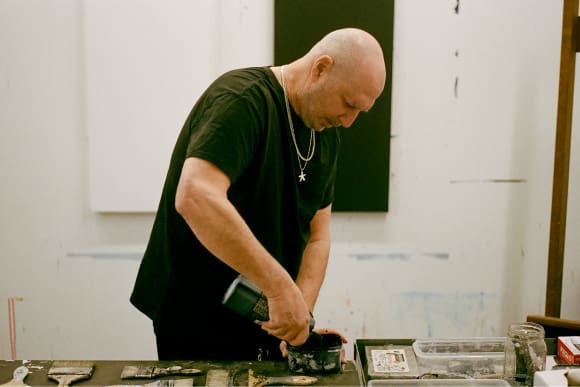
Haze at work painting in his studio. The space is divided into two areas: a production space and a showroom-like area displaying past collaboration projects.
―― Tell us about this studio in Brooklyn.
I’ve been in Williamsburg for about fifteen years now. During that time, both the brand and my own work have expanded in a lot of different directions. My career hasn’t really been a straight line. It’s been more like a winding path. There were times when graphic design was my main focus, and others when I worked as a painter, graffiti artist, or art director. I’ve also always been the brand director for Haze. When I was younger, I would focus on one field at a time, and once I felt satisfied with it, I’d move on to the next. Lately I’ve returned to painting, and over the past ten to fifteen years it feels like the different parts of my work have started to come into balance. The studio reflects that as well. It’s almost like a home that brings everything together. One side functions as a more commercial space, almost like a showroom, while the other is a personal space where I work late into the night, exploring my own thoughts and emotions.
―― Are there any places or works that feel especially meaningful to you?
Honestly, I feel the same attachment to both spaces. I’m often asked which work is my favorite, but it’s like choosing between your children. You really can’t. Of course, there are projects that felt like huge moments at the time, like the Beastie Boys cover, the EPMD logo, or the uniforms for the US Ski Team. But creatively, I like to think that the next project will be the best one. That sense of excitement about the unknown is what keeps me inspired.
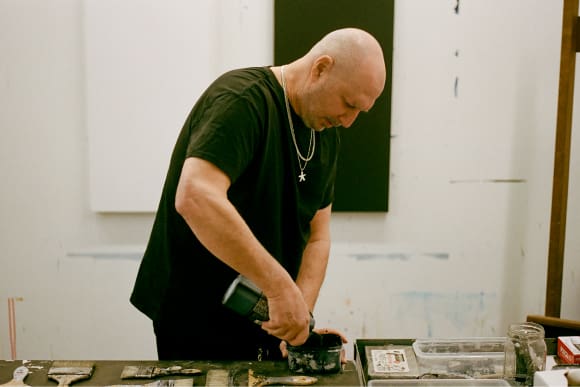
Haze at work painting in his studio. The space is divided into two areas: a production space and a showroom-like area displaying past collaboration projects.
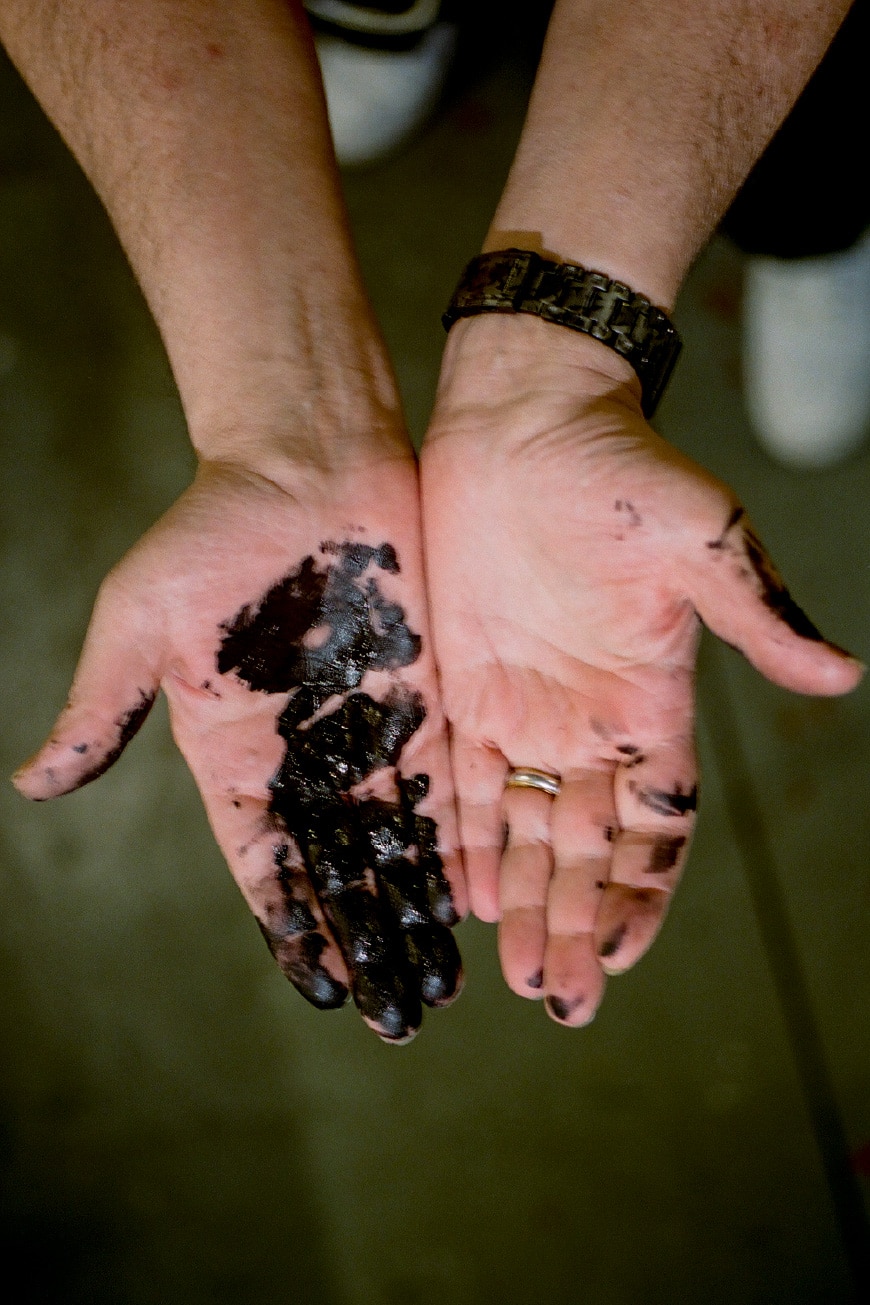
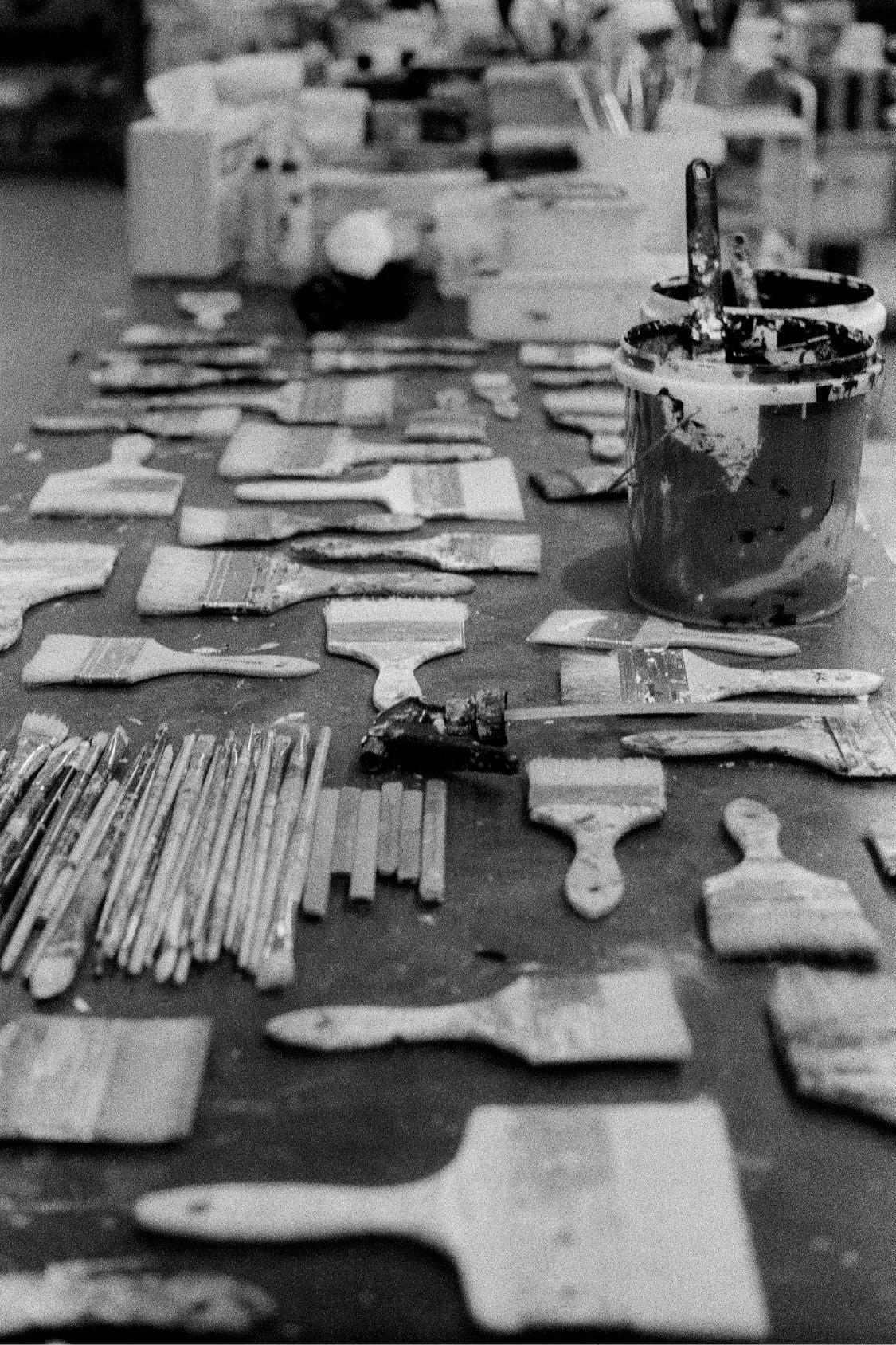
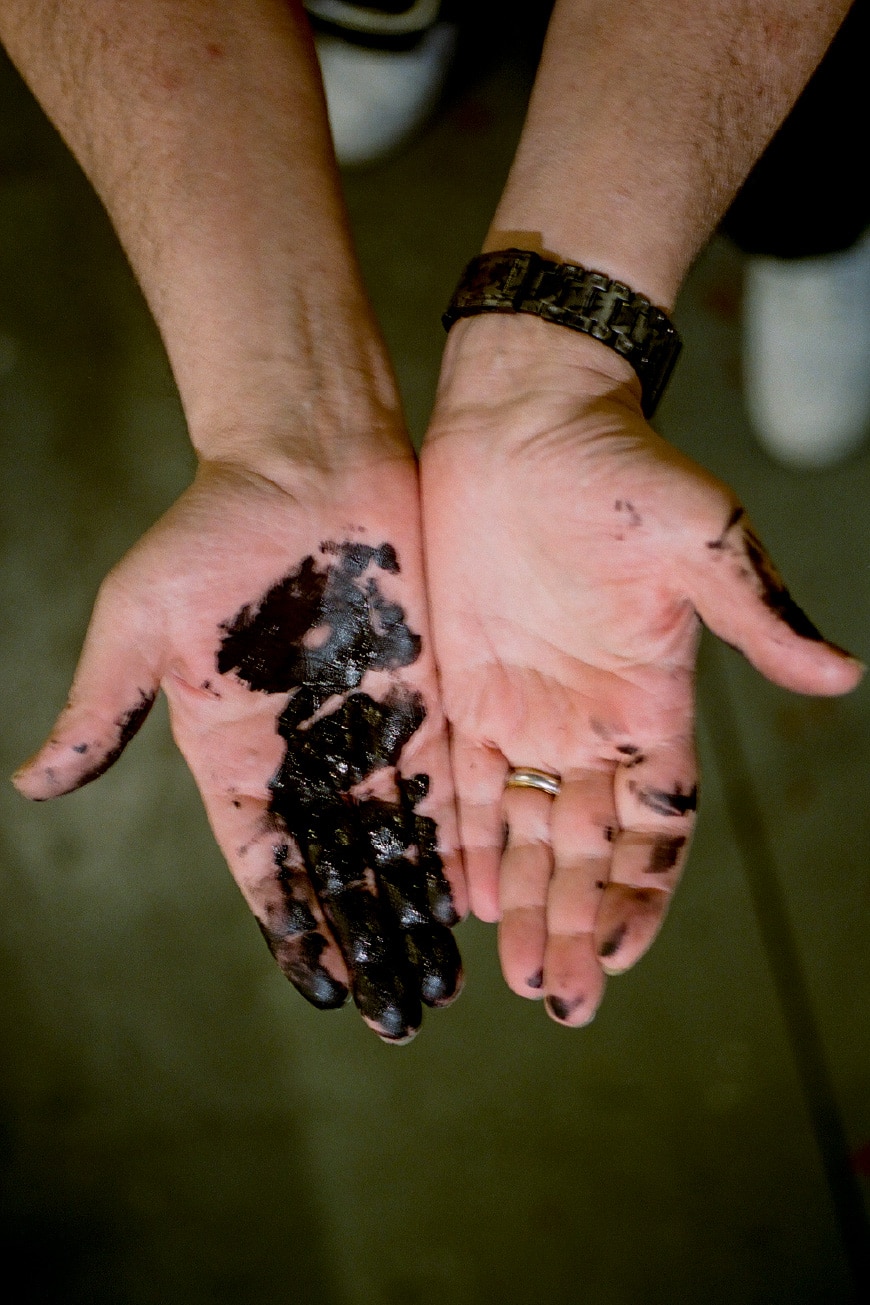
Brushes neatly lined up on the table. Stained with layers of ink, they almost look like artworks themselves.
―― When it comes to producing strong work, what do you keep in mind about the environment you create around you?
For me, success isn’t about money or titles. It’s about whether I have control over my creative direction. It’s the feeling that I’m in charge of my own life and my own work. As I’ve gotten older, I’ve reached a point where I can choose only the projects I feel passionate about. I want to feel one hundred percent comfortable with everything, from the relationships involved to the final outcome. Because of that, I’ve become much more careful about who I work with and what kind of projects I take on. I’m also grateful for the support I’ve received from the community, and I want to support people who are working hard as well. More than whether someone wins or loses, I respect the effort people put into their work.
―― With so much work happening every day, what do you keep in mind?
My mindset is that everything matters. Clients or customers might not notice the small details, but we do. The goal is to always give one hundred percent. Of course there are mistakes, and nothing is perfect, but what matters is to continue to aim for the highest quality. Some days you win and some days you lose, but if you know you gave it everything you had, you can accept the result.
―― Do you have any routines before work, or any particular preferences when it comes to tools?
In my personal life, I really value spending time with my family. I got married at fifty, and now time with my wife and grandchildren means the most to me. As for tools, when I was younger spray paint and markers felt natural to me. But when I returned to painting, I made a point of not using them. Instead, I chose more traditional materials like brushes and charcoal. I also stopped using many colors and settled into a world of black, white, and gray. Maybe that reflects the sensibility of growing up in the slightly gritty gray of New York. In design there are right and wrong answers, but in fine art there aren’t. Sometimes mistakes even turn out to be the best part. So in that sense, I choose my tools depending on the purpose.
―― What does your collaboration with G-SHOCK mean to you?
It’s one of the longest professional relationships of trust I’ve had, going back to 1998. We understand each other’s style, which makes it very easy to work together. When I design logos, I try to balance G-SHOCK’s established identity with my own style. The G-SHOCK character always comes first, and within that I try to leave my own fingerprint.
―― What advice would you give to young creatives?
First of all, believe in yourself. Find what you’re passionate about, and work to bring your life and your work closer to that passion. Living your dream takes time and practice. In the end, the only thing you can do is to keep doing the work. Do it, keep doing it, and you’ll keep improving. Everyone’s path and dreams are different, but I think the most important thing is to pursue your own dreams. And don’t rely too much on technology. Computers, brushes, pens, they’re all just tools. The magic doesn’t come from the tools. It comes from the person using them.
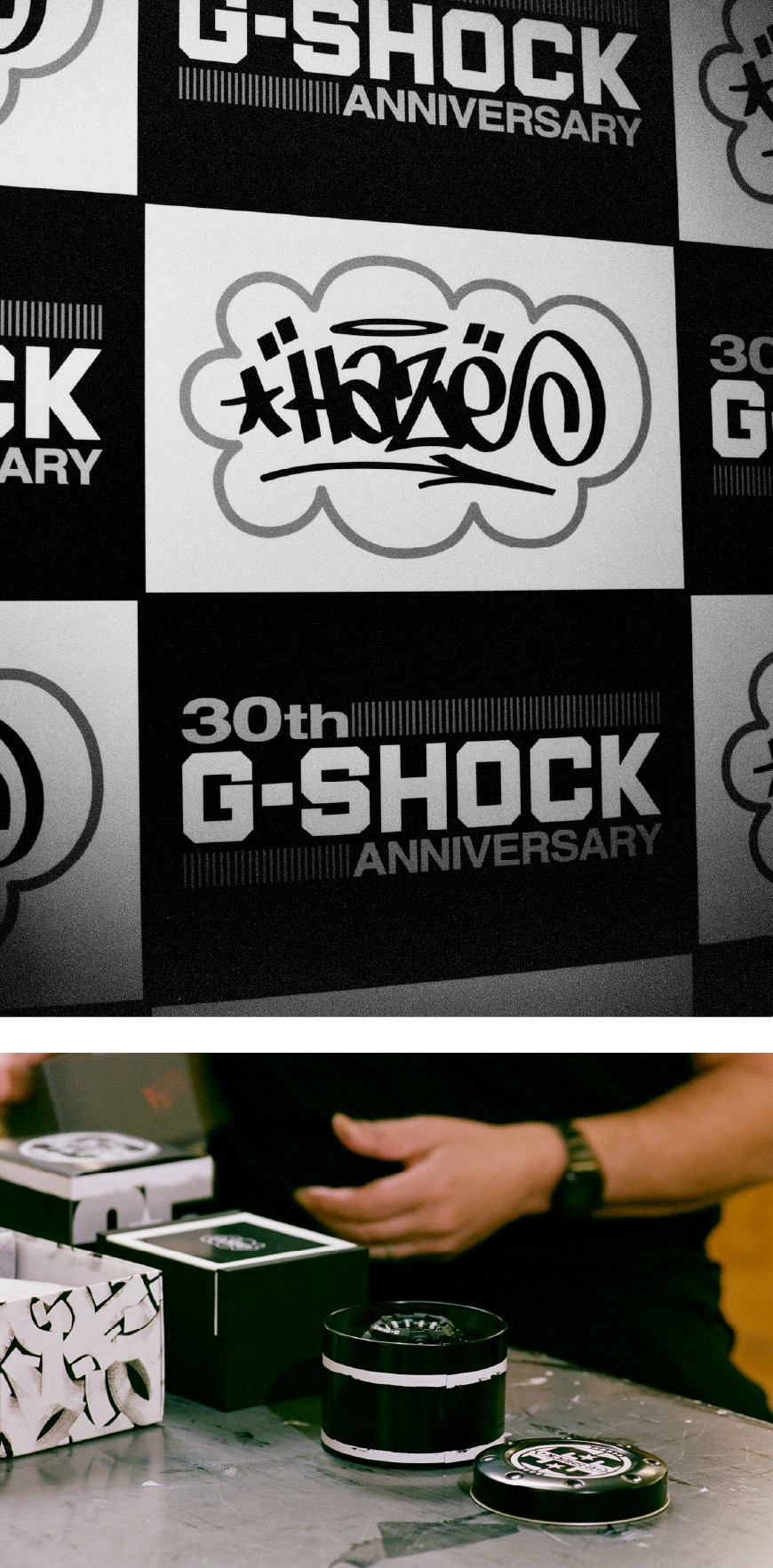
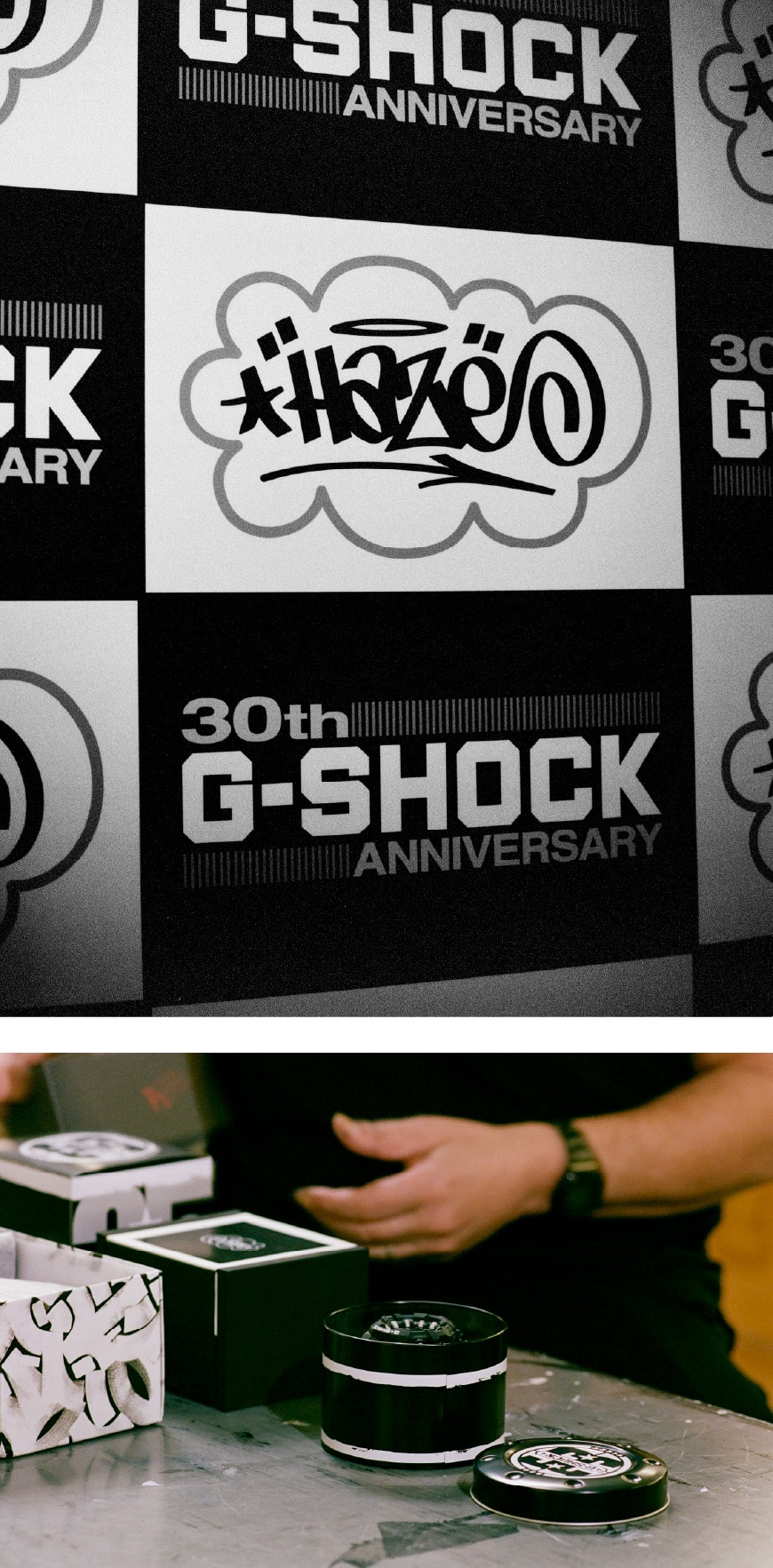
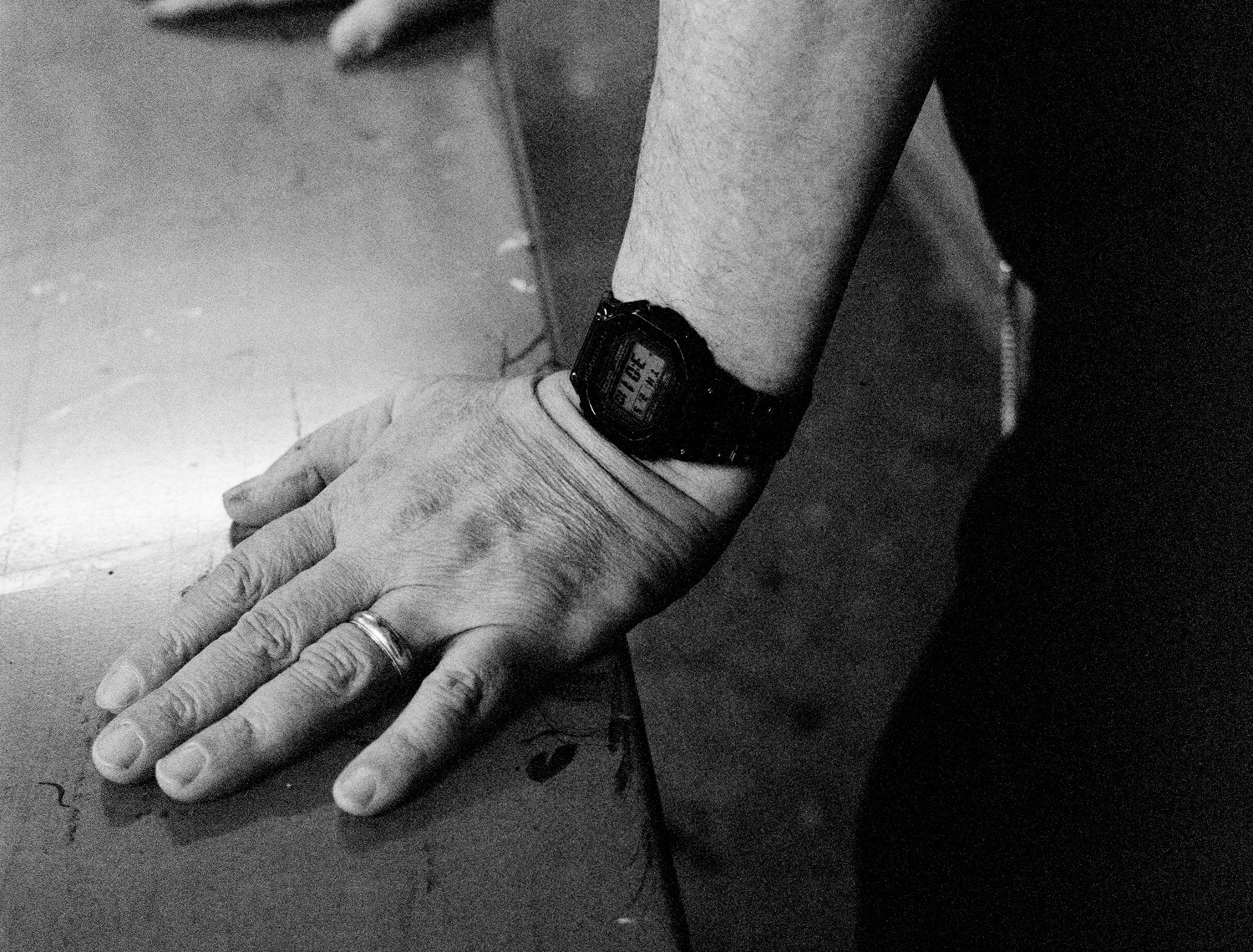
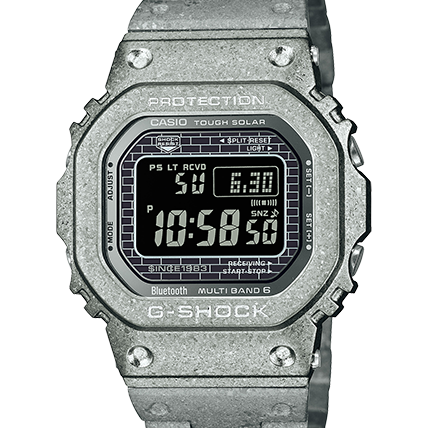
In addition to designing watches, Haze has also created the logos for G-SHOCK’s 25th, 30th, 35th, and 40th anniversaries. Alongside the 40th anniversary model he wears on his wrist, many archival pieces are displayed throughout the studio.
Profile.
Eric Haze
A key figure in the graffiti scene of the 1980s, Eric Haze has worked across graphics, fashion, logos, and art direction, with deep ties to hip hop culture. He is the founder of the Haze brand and is known for collaborations and design work with G-SHOCK, the Beastie Boys, among many others.
Instagram. @erichazenyc
Photography. Koki Sato
Interview. Shimpei Nakagawa
Edit & Text. Takayasu Yamada_THOUSAND
Tokyo

Los Angeles

Paris

New York


THISTIME MAGAZINE
Creator Interview