





























MR-G timepieces are inspired by an endless vision. Their development is driven by the excitement and insatiable curiosity of venturing into the unknown, and that is the bold experience they offer to the owner. Bringing together total toughness and transcendent beauty, they stand for tireless evolution in pursuit of entirely new value.
The phrase “Breaking Ground” captures this spirit and defines the MR-G philosophy. To defy convention and break through to new horizons — as every adventurer knows, this is a quest that knows no end.
The MRG-D5000, the first ever MR-G to feature a sapphire crystal case, was born from the Blue Rose Project, an ongoing initiative to take on challenges that transcend even G-SHOCK conventions. The project takes its name from the blue rose, an extraordinary horticultural feat achieved with cutting-edge biotech and human ingenuity — accomplishing something no one thought could be done.
At the heart of the endeavor lies the vision of Kikuo Ibe, the developer who created the first G-SHOCK in 1983. His passion to craft a tough watch that would not break even if dropped drove him to develop that very first model. In later years, his vision inspired further innovations, including full-metal and solid-gold timepieces.
Another long-held dream of Ibe’s was to create a shock-resistant watch made out of sapphire crystal, but it eluded him. Standing on his shoulders, though, his successors, after years of effort, achieved what had once seemed impossible: a shock-resistant structure in sapphire crystal. Thus came the MRG-D5000, a new pinnacle in the evolution of MR-G. The patented construction delivers a transparent blue sapphire case by combining multiple smaller sapphire crystal components around a grade-5 titanium alloy inner case with a black diamond-like carbon (DLC) coating.
So, the question is: What might this amazing timepiece inspire in contemporary artists?
In our “Making Art with MR-G” project, we commission contemporary artists to create works of art incorporating MR-G timepieces. This third installment features Mariko Mori, an artist who has built a unique worldview by exploring the intersections between spiritual realms of Buddhism, Zen, and ancient Japanese mythology and cutting-edge physics and technology. In the commissioned piece, Mori more than captures the technology and dedication to craftsmanship that have come together in the MRG-D5000, and the result is a compelling work of art.

Contemporary Artist Mariko Mori’s Pursuit of “Oneness”
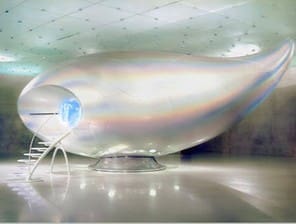
Since her debut in the 1990s, contemporary artist Mariko Mori has presented works spanning a diverse range of media, including photography, video, drawing, sculpture, and large-scale installations.
In recent years, her works have explored connections between humans, nature, and the universe, with reference points including the Kojiki (“Records of Ancient Matters,” Japan’s oldest extant chronicle) and ancient ruins from around the world. Her first major retrospective in Japan in 24 years, Mariko Mori: All That Shines, will open at the Mori Art Museum in Tokyo on October 31, 2026. While her artistic expression may appear to have changed considerably over time, Mori explains that a single, unchanging theme runs through her work.
“Though I approached my early photographic works from a social perspective, I have been working to express a concept of ‘oneness’ since around the time I presented my first video work in 1996. Oneness is also the title of the subsequent retrospective of my work that has travelled around the world. Looking back, I see that ‘oneness’ has been a consistent theme throughout my work.”
For Mori, “oneness” refers to the idea that everything is interconnected, that self and others are not separate, that humans and nature are part of an intrinsic whole. Behind this concept lies her exploration of Buddhism, which she has pursued since her twenties. Losing her father while studying abroad in London initially prompted the artist to reflect on life and death, an experience that led her to study Buddhist teachings. Eventually she began doing zazen meditation at a Zen temple, where she gained insight from the words of the head priest.
“The idea is that, while we may appear to exist separately, with boundaries between ourselves and others, in reality, we are all one. This is a concept rooted in Zen, and when I heard it, it just seemed to click for me.”
For this installment of “Making Art with MR-G,” we presented Mori with the MRG-D5000 — a new pinnacle of MR-G craftwork distinguished by its deep, clear blue case. What kind of artwork did this watch inspire Mori to create?

Mariko Mori
Born in Tokyo. After graduating from Chelsea College of Arts, London in 1992, Mori completed the Independent Study Program at the Whitney Museum of American Art, New York in 1993. Her work explores connections between humanity, nature, and the universe, bringing together Buddhism, Zen, Japanese mythology, and ancient cultures with physics and technology. Working across a diverse range of media, including photography, video, installation, and sculpture, she has developed a unique worldview with “oneness” at the core of her philosophy. Her major awards and honors include the Menzioni Onorate at the 47th Venice Biennale (1997), the 8th Japan Art Encouragement Award (2001), and an Honorary Fellowship from University of the Arts London (2014). Her works are held in major museum collections around the world, including The Museum of Modern Art (MoMA), New York; Solomon R. Guggenheim Museum, New York; Centre Pompidou, Paris; and Tate Modern, London. Her first major retrospective in Japan in 24 years, Mariko Mori: All That Shines will open at the Mori Art Museum on October 31, 2026.
Yuputira on Miyako Island
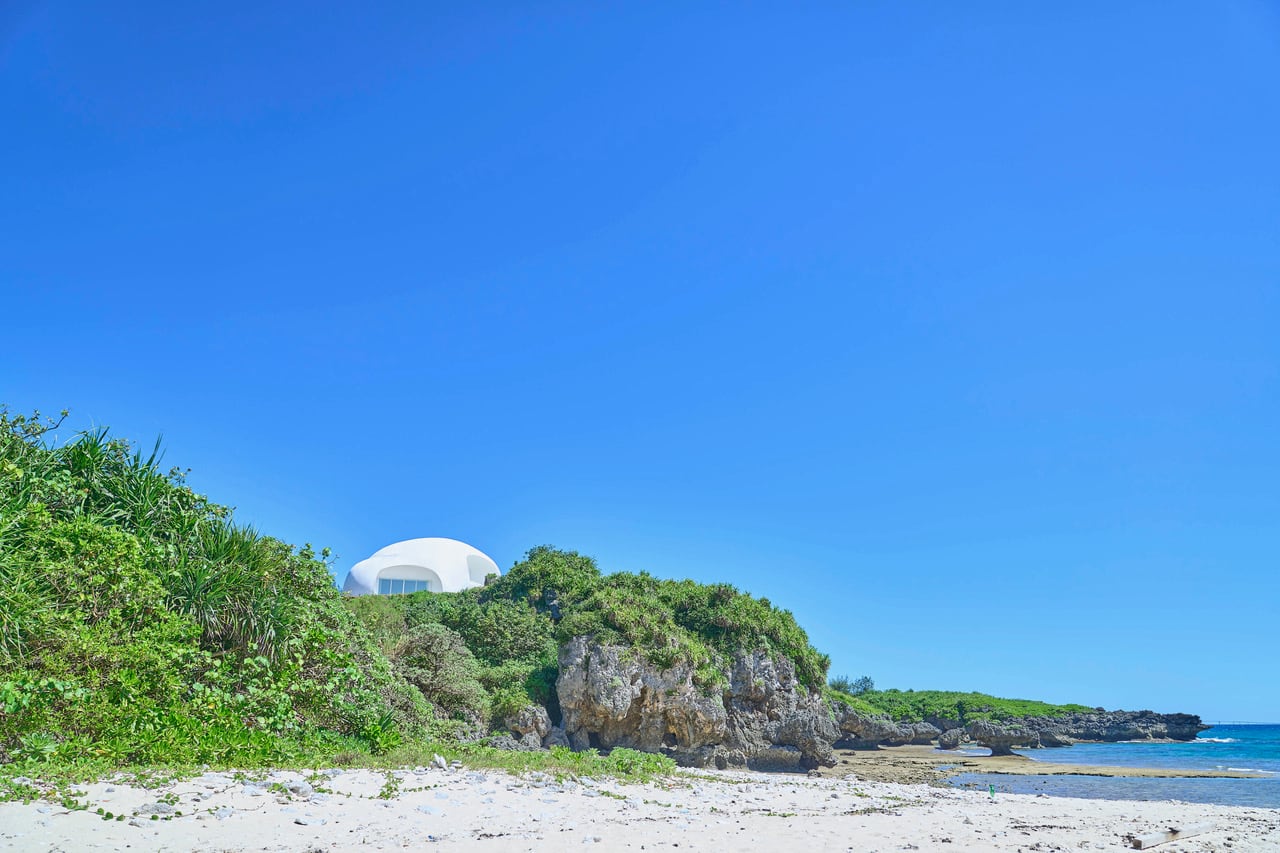
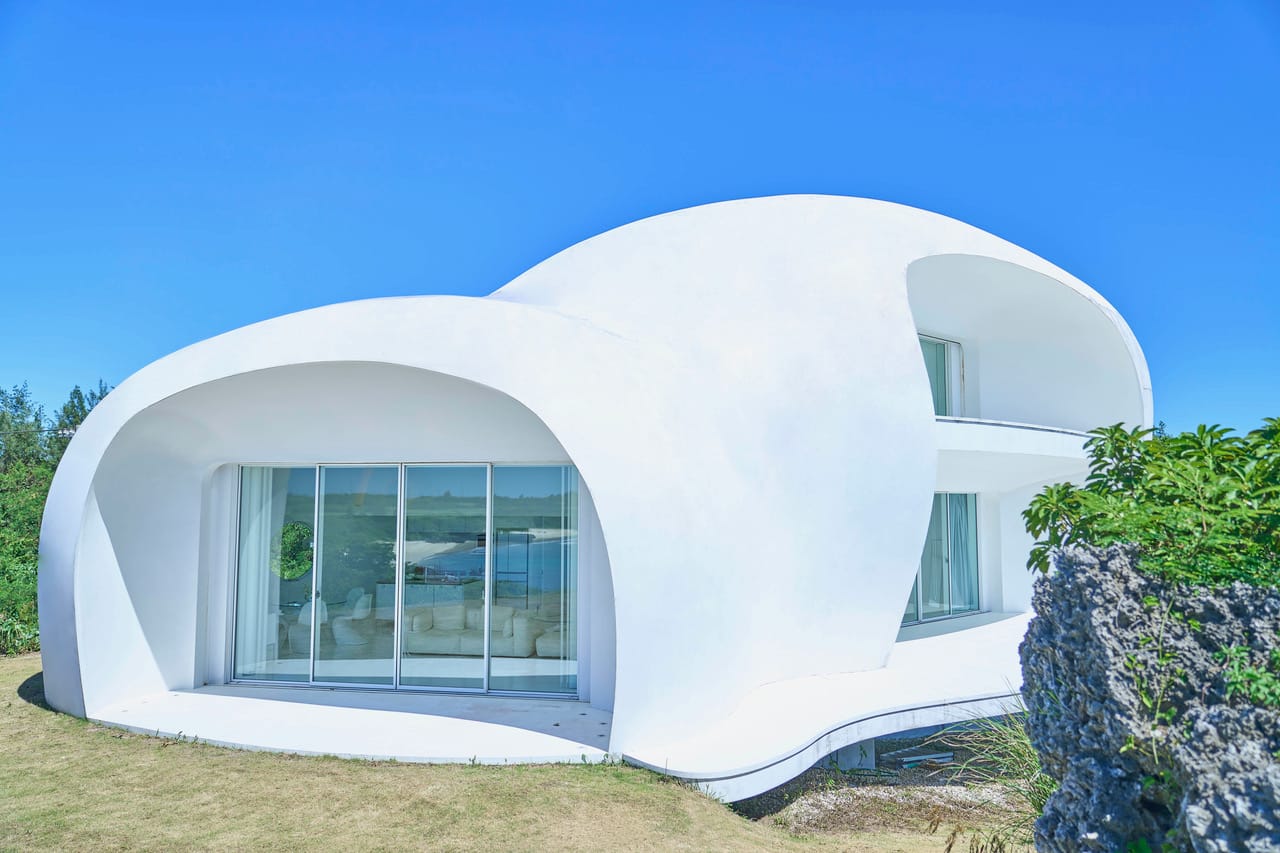
Bathed in brilliant sunlight, the crystal-clear sea glitters in vibrant blue tones. The white sandy beach is dotted with pieces of coral, smoothed and rounded by the waves. Further along the shore, a pure white structure comes into view: Mori’s Atelier Yuputira, completed by the artist in 2022.
Inside is a space suffused with white. On the upper floor, reached via a translucent spiral staircase, the sea of Miyako Island fills the large windows. Right in the center is a rocky reef. The only furnishing in the room is a white desk, where Mori makes her drawings of light each day.
“Drawing here while taking in these views before me, I get a palpable sense of opening up. Idle thoughts and distractions disappear, and I seem to develop an inner capacity to receive the essence of things. This is a place for me to connect with nature as it exists within my own self. Gazing out at the sea gives me an inner sense of expansiveness, perhaps similar to what I feel at a Zen temple. Like the sunlight in front of my eyes, there is a radiance within me as well, shining brilliantly. I draw with the sun as a mirror of myself.”
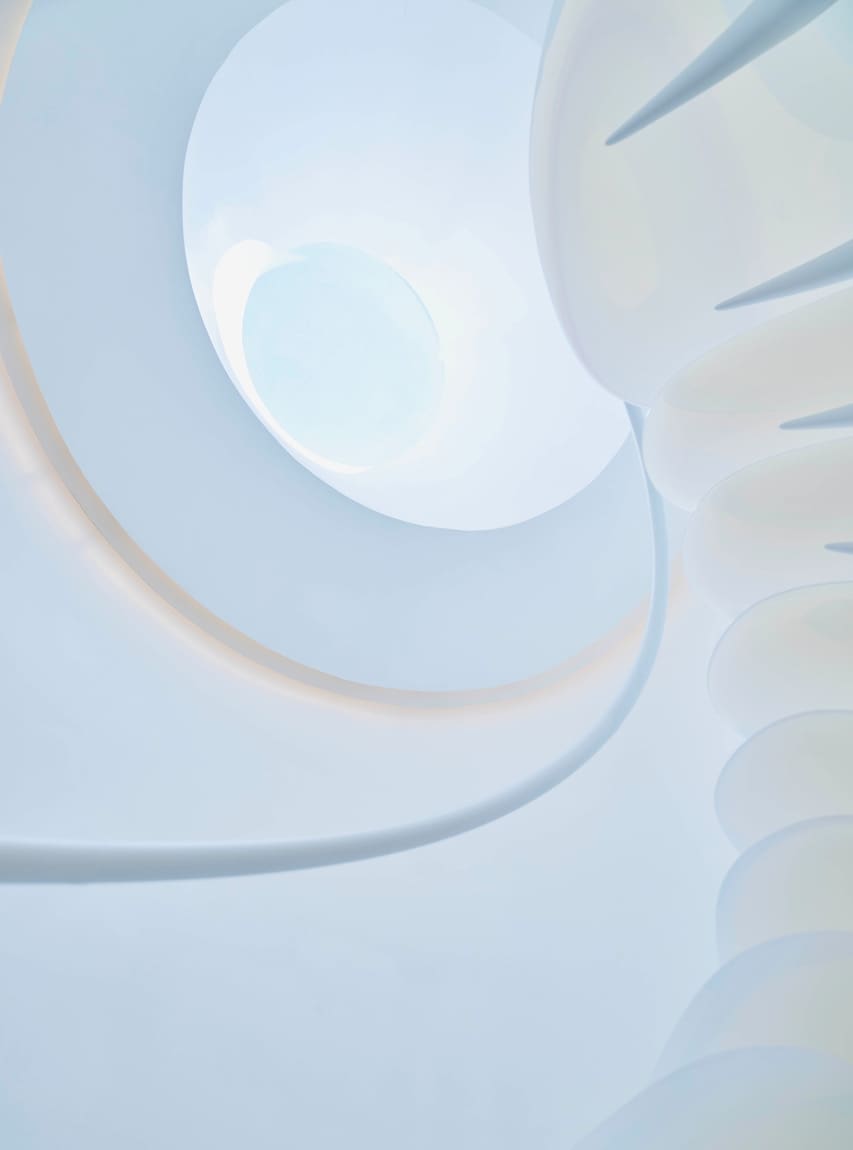
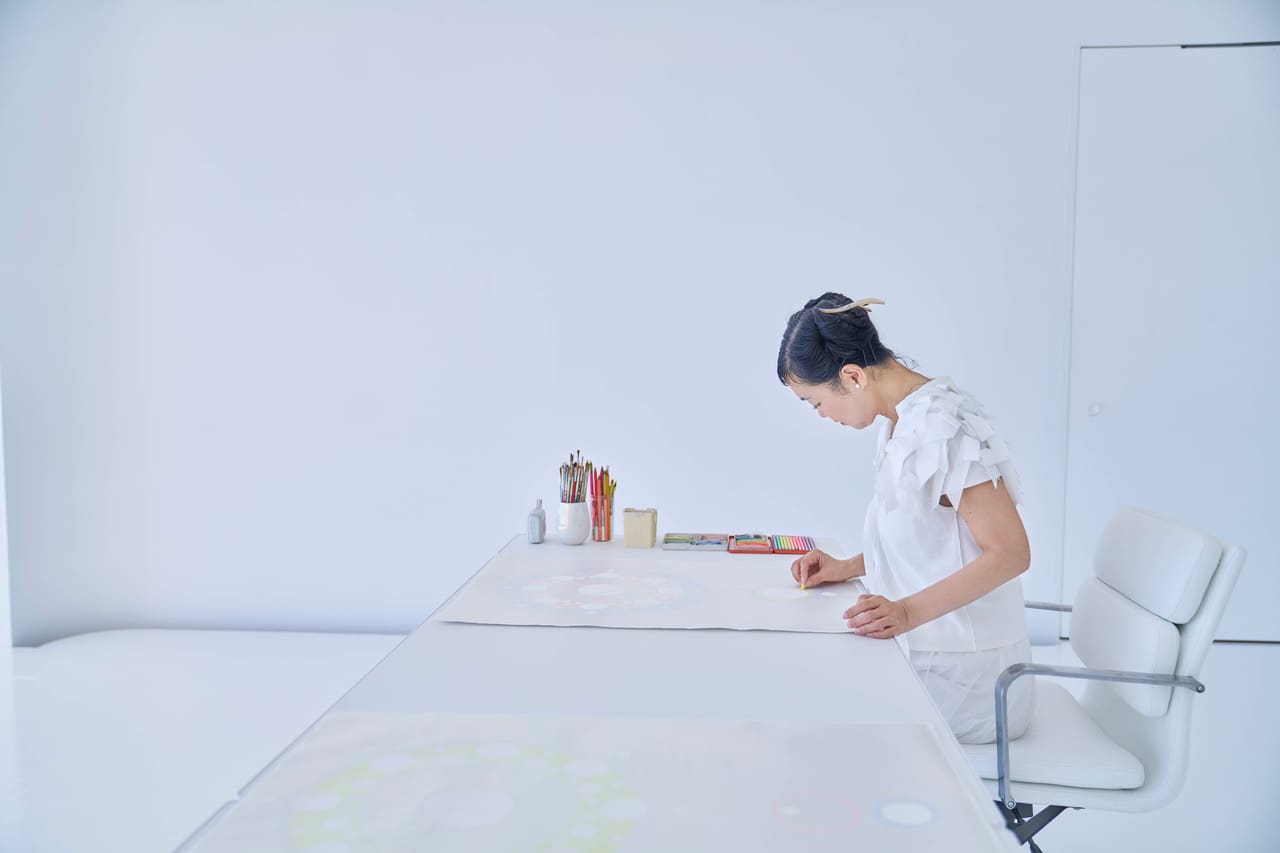
Since its completion in 2022, Yuputira has served not only as the base of her art production but also as a place that nurtures her creative explorations. She creates her drawings here face to face with nature. At times, she prepares tea in the tearoom.
“This is an architectural structure, yet a work of art as well. Time flows slowly here, and perhaps the space itself envelops us like a cocoon.”
Asked about her first impression on taking the MRG-D5000 in hand, Mori reveals it was the hue of the sapphire crystal that first caught her eye. “That tone of blue you see when the light shines through is really just so beautiful,” she says, and from there the topic naturally progressed to the similar material of glass.

“Although it’s transparent, glass exudes such a sense of presence and takes in light. I really love these qualities of glass. Once, long ago, I made a visit to a location in the desert where a meteorite had fallen, and there, the heat had turned the sand to glass. Seeing that spot, it just felt right to me — somehow fitting: a new form of matter forming through this contact between an object from outer space and a material here on Earth. I think of glass as a material that reflects a world somewhat different from the one visible to the eye.”
Upon being presented with the MRG-D5000, Mori set to work creating a new piece. Later, she would reveal the piece in her studio space.
Sapphire Crystal, Iwakura Stone, and a New Vision Beyond
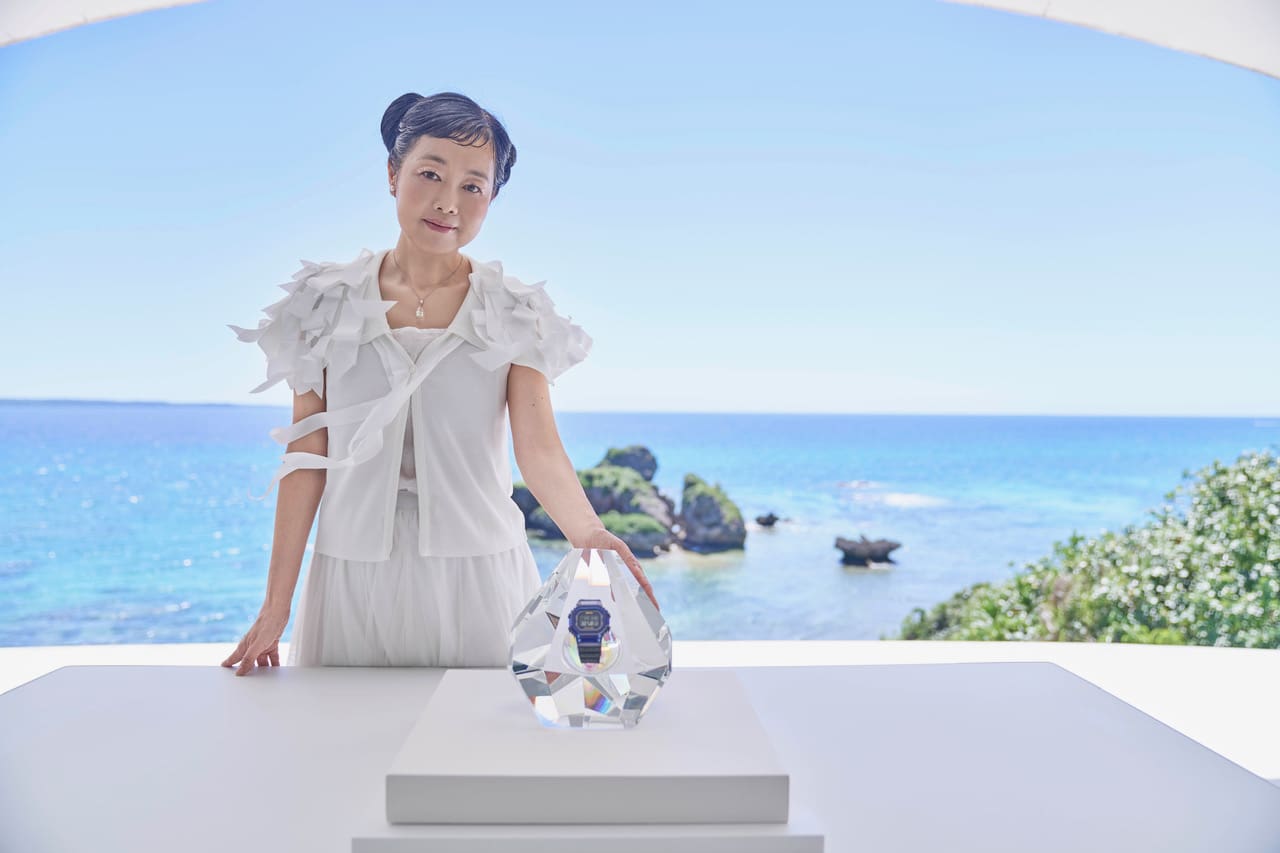
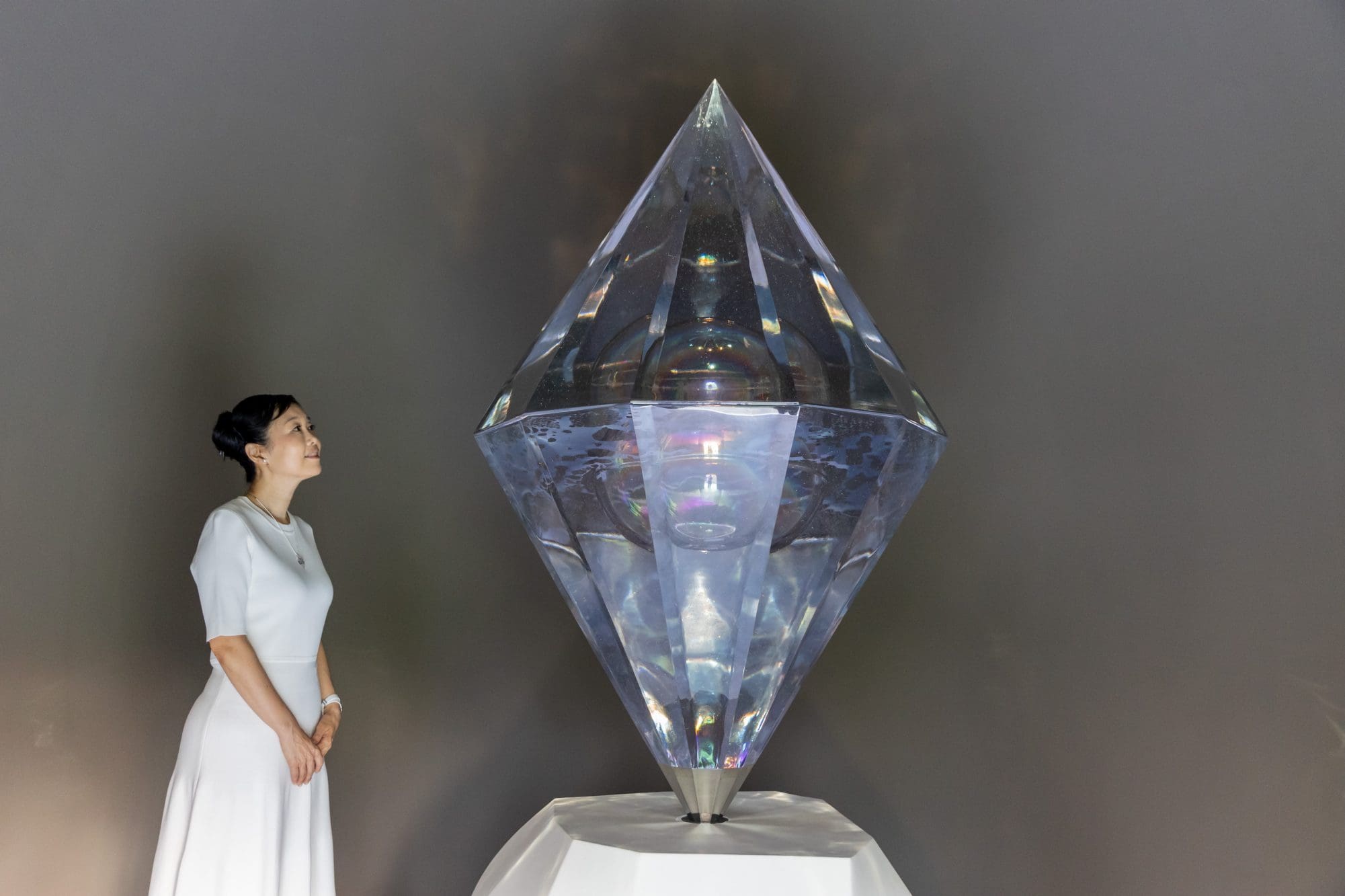
A further visit to the artist’s studio, with its views out over the sea, revealed a transparent crystal placed prominently in the space against the grandeur of the ocean backdrop. Light streaming into its sharply edged, crystalline form refracted within it, shining with a dazzling radiance.
Set in the center was the MRG-D5000 presented to Mori. The piece was inspired by Iwakura — sacred stones associated with deities’ presences — which are often found at shrines and archaeological sites throughout Japan. Since ancient times, the stones have been revered as yorishiro — vessels with the capacity to attract deities, offering them physical spaces to occupy during ceremonies. Mori has long researched iwakura in various locations and created works expressing the invisible presence that people have perceived in the stones.
“Being presented with the watch and learning about the MR-G dedication to exploring new, uncharted horizons while integrating incompatible elements, I meditated on the combination. The archetype of the piece is my Plasma Stone series, referencing a theory in cosmology that everything existed in a plasma state prior to the Big Bang. A cyclic form of cosmology further posits that the universe goes through repeated cycles of birth and death. ‘If there were a stone that existed prior to the beginning of this universe, might it not carry memories of that?’ — That was the concept that led me to create this piece.”

Iwakura have been regarded since ancient times as stones holding a sacred presence, and today’s physics expands the imagination to consider a primordial cosmos without beginning. Mori overlays these two seemingly distant worlds using the singular motif of “stone.”
“I use crystal glass, which is composed primarily of silicon dioxide, the same main component as rock crystal. This is a material with a very high degree of hardness that is quite difficult to process and shape. At the same time, however, this gives the piece a sense of weight and prism-like brilliance, even with the transparency of the material.”
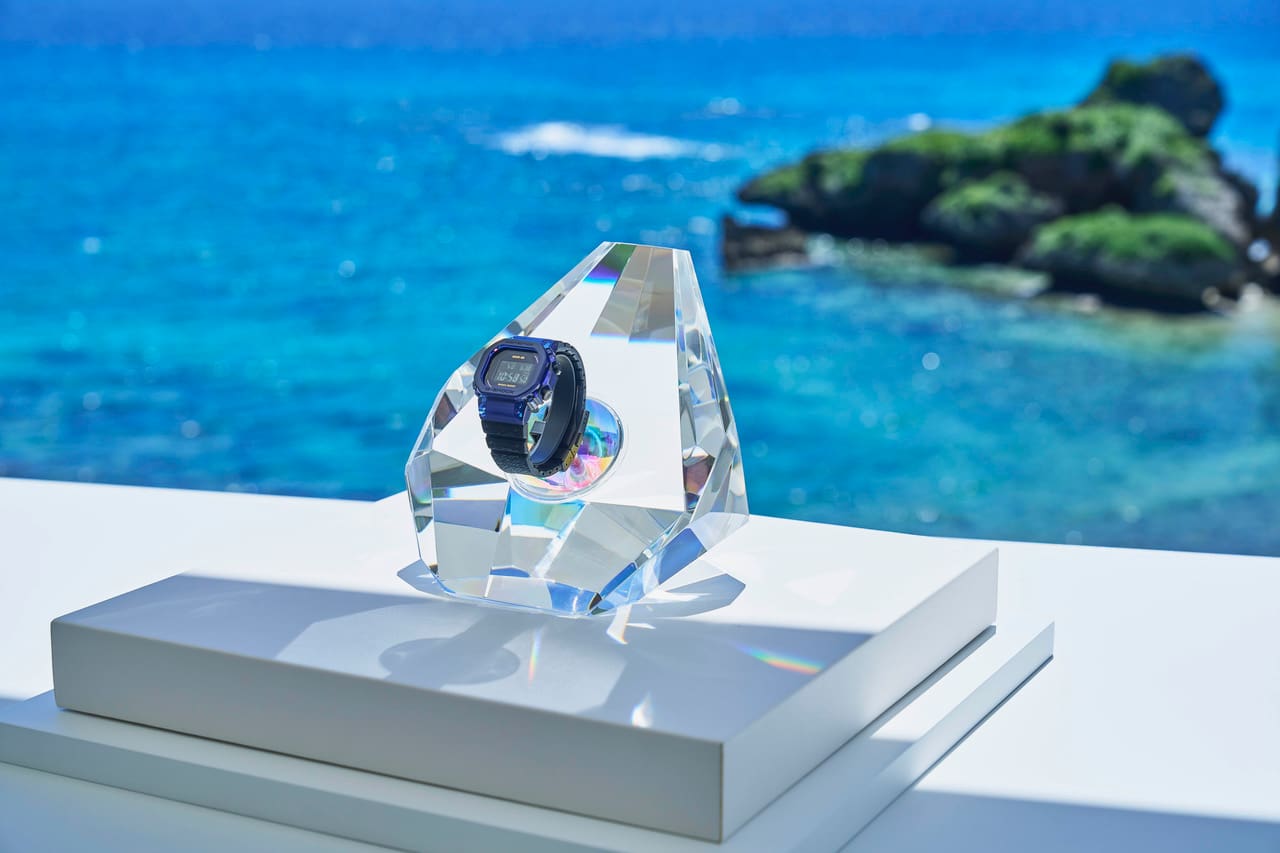
The transparent crystal form evokes iwakura, stones revered since ancient times as places that welcome deities. Despite its light, translucent appearance, the piece has a considerable weight to it. In its center is set the MR-G, crafted with state-of-the-art technologies. As the light poured onto them and the two became one, a sight never before seen came into view.
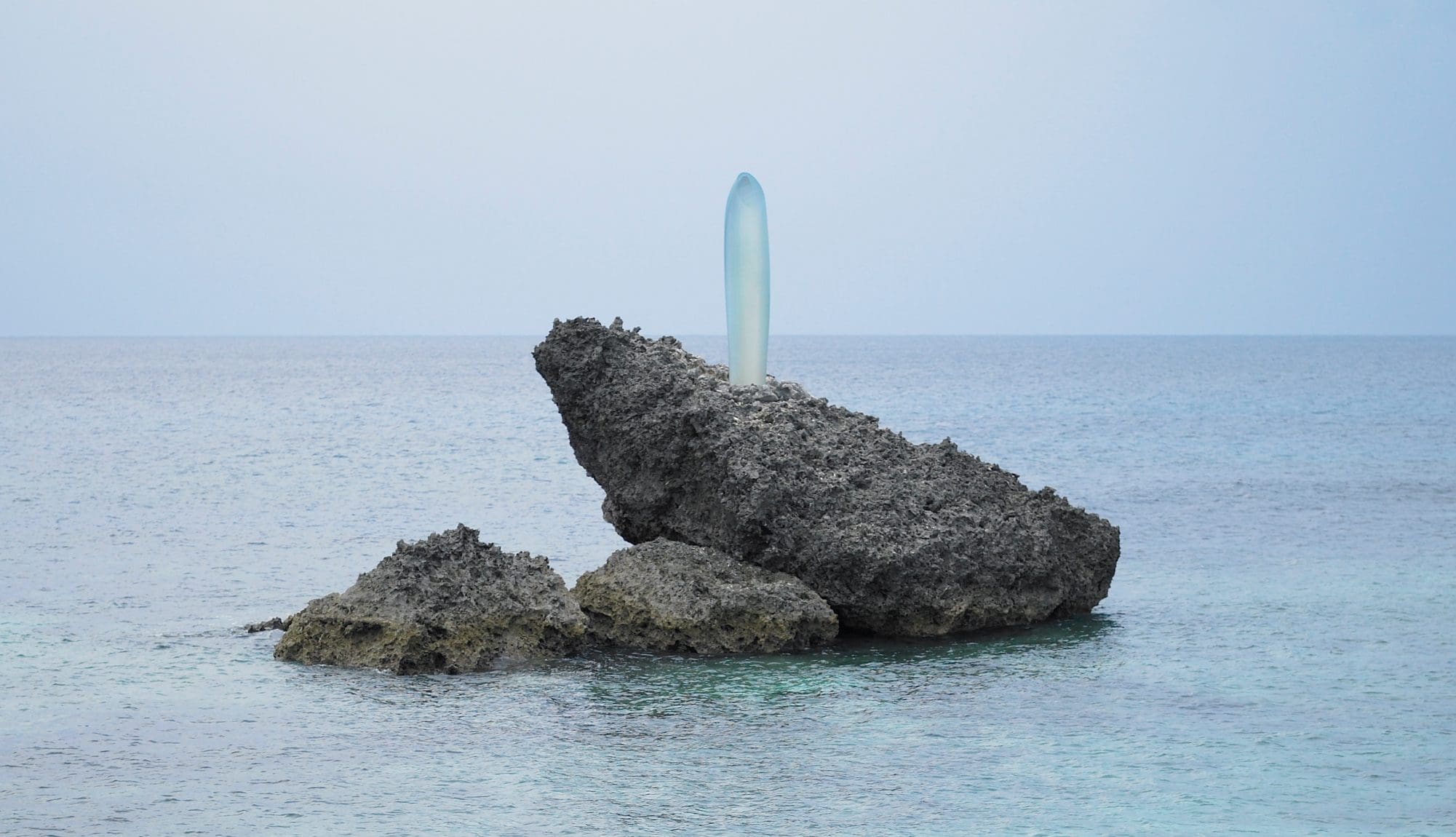
Perhaps There Is Neither Beginning Nor End

The transparent crystal form calls to mind iwakura, stones revered since ancient times for their capacity to attract deities. Set in its center, the MR-G delivers timekeeping with remarkable precision.
To capture and mark the invisible passage of time with accuracy — this has always been the purpose of the timepiece. MR-G takes this pursuit even further, using finely refined technologies to offer strength and practicality, including shock resistance, along with beauty rooted in Japanese craftsmanship. The MRG-D5000 takes that a step further still by incorporating sapphire crystal, which is notoriously difficult to process, into a shock-resistant structure.
How does Mori herself perceive the “time” that this special watch unceasingly marks?
“In Buddhism, there’s a term denoting ‘beginningless-ness’ — in Japanese, mushi — which refers to the idea of a past with no beginning. I was also captivated by the beauty of ‘the beginning’ as an expression appearing at the opening of the Kojiki. This was one answer that came to me through meditation — that no beginning exists. And if there were no beginning, I felt, then neither might there exist an end. Humans have devised a timeline conception consisting of a past, present, and future. But was there really a beginning?
“Physics also contains concepts like a pre-Big Bang universe and the Ekpyrotic universe theory, which posits that the universe itself is cyclical. Buddhist thought extends beyond physical matter to encompass realms like deep consciousness, as well. That suggests to me that time as we are capable of perceiving it with our surface-level consciousness accounts for only a tiny fraction of what is really out there.”
Ancient spiritual beliefs and modern physics. Transparency and weight. Light and matter. Mori has combined and overlaid these seemingly opposing elements in her work. Likewise, MR-G timepieces bring the seemingly opposing values of strength and beauty together within a single form — the kind of thing that is only possible with unwavering determination and the most advanced technologies in the world.
To integrate disparate qualities and elements as one, rather than keeping them separate. This corresponds to the concept of “oneness” that has guided Mori. It also aligns with the MR-G philosophy of going beyond convention to pioneer new forms of value. Perhaps that is precisely why Mori placed the MRG-D5000 right at the center of her clear, crystalline iwakura-inspired piece.
The windows of the studio frame panoramic views of the sea. Waves lap against the shore and recede. Crystal-clear, Mori’s piece invites the imagination to expand beyond the present to ancient iwakura stones and the origin of the universe. Set in its center, the MR-G, radiant with its blue sapphire hue, unendingly marks the passage of time with steadfast precision.
Prayer Stone: Forging Connections with Unseeable Realms of Light
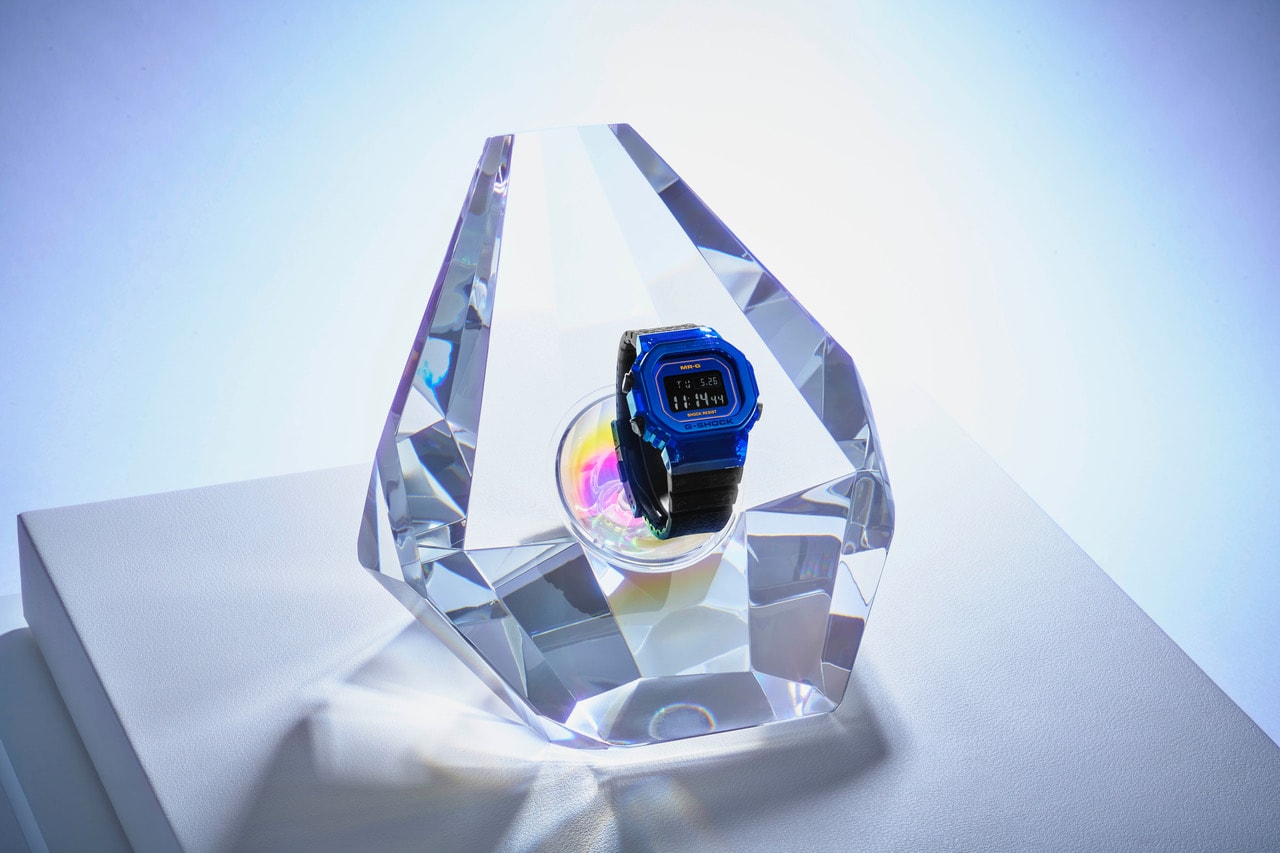

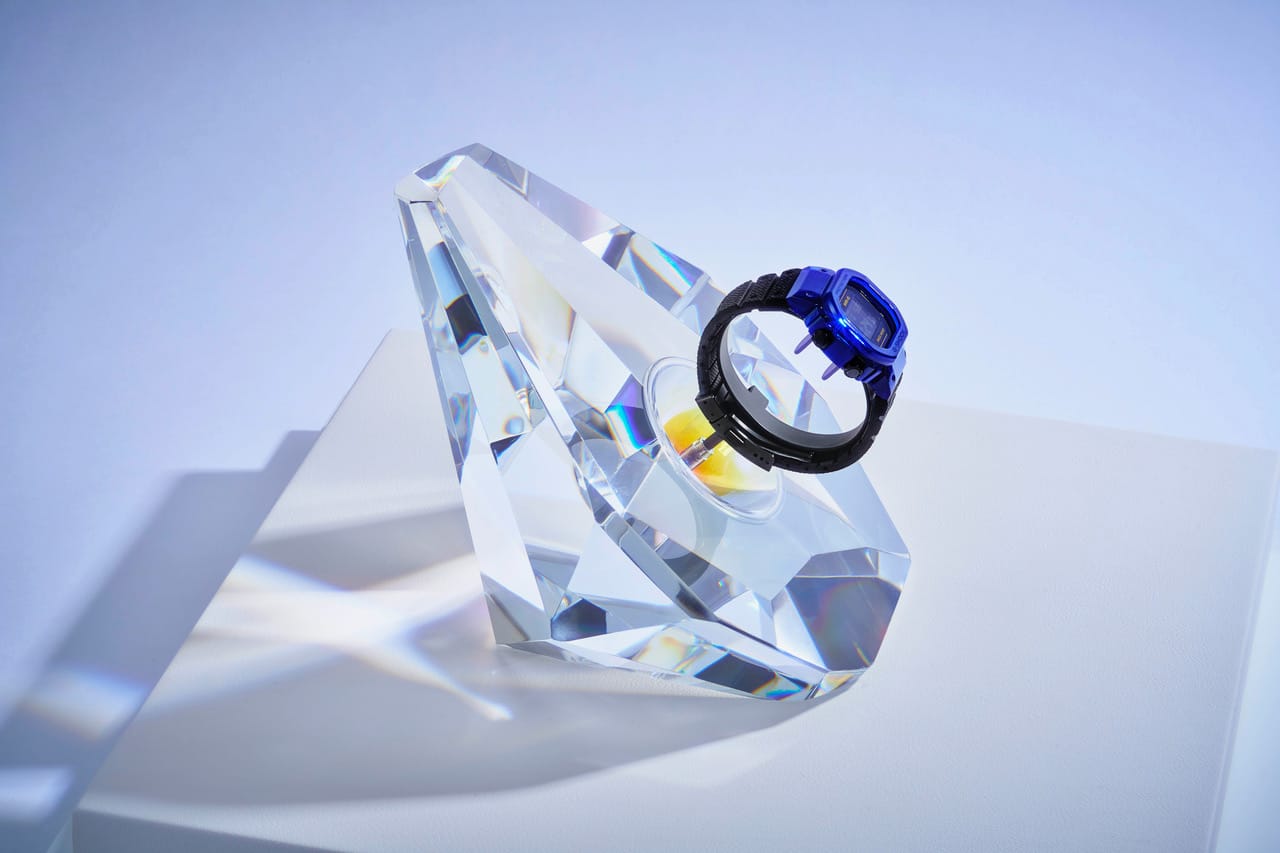
“As I’ve travelled around to see iwakura across Japan, I’ve been deeply fascinated by the ancient belief that deities descend upon these stones and that a sacred presence dwells within them.
“What I hoped to convey with my work Prayer Stone was not the materiality of the stone itself, but the presence dwelling within it, invisible to the eye though it may be. When I stand facing an iwakura, it feels to me as if the stone is filled with light and that it is connected to a realm of light not visible to the eye.
“With Prayer Stone, I attempted to visualize the unseen presence in the form of diversely colored light emanating from within. Nature, the universe, and the spiritual nature within us are all, at their essence, connected as one. If viewers of the piece can experience that sense of interconnection, I could ask for nothing more.” (Mariko Mori)