




Free shipping on orders over $99
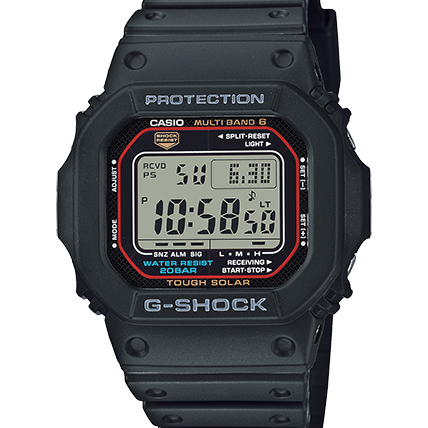
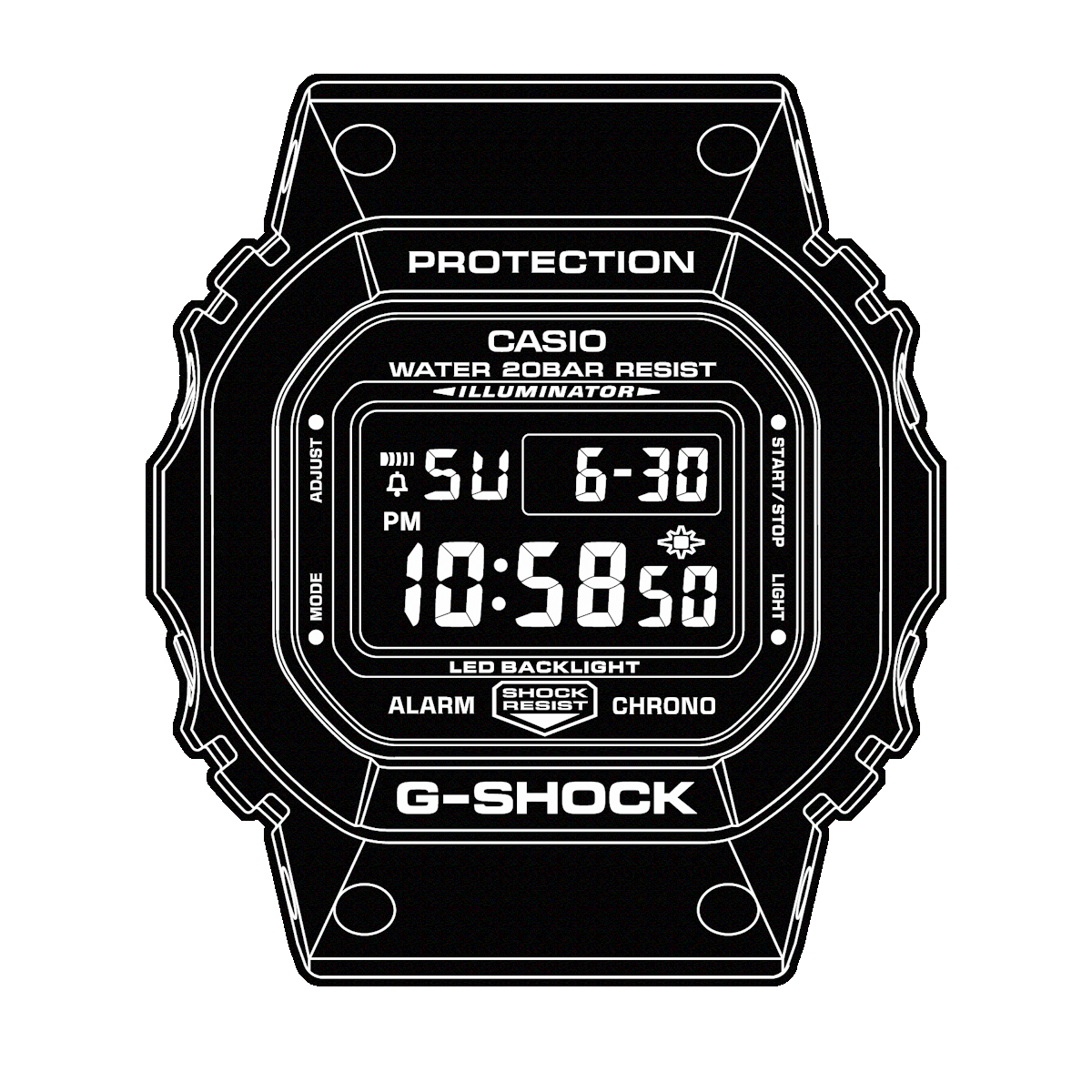
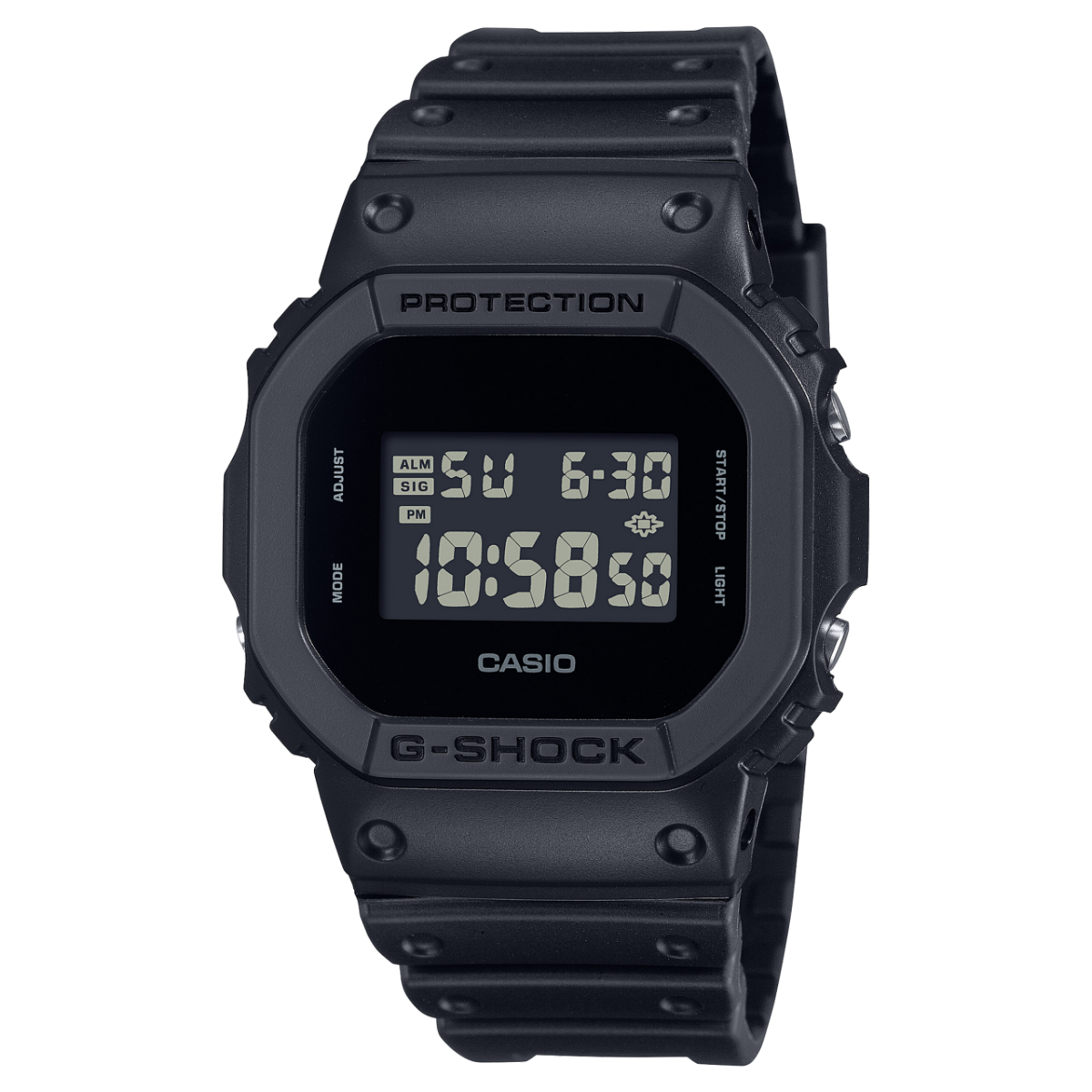
Five G-SHOCK watch models underwent mil-spec-810 testing, including the G-SHOCK DW5600UBB-1. Crafted for absolute toughness in rugged environments, the G-SHOCK DW5600UBB-1 combines legendary shock resistance and 200-meter water resistance with a 5-year battery and critical features for the field such as 1/100 second stopwatch, timer with auto repeat, and 12- or 24-hour time format, all in a rugged digital design.
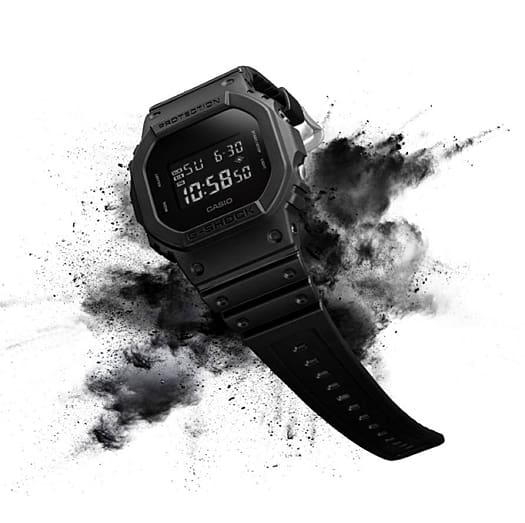
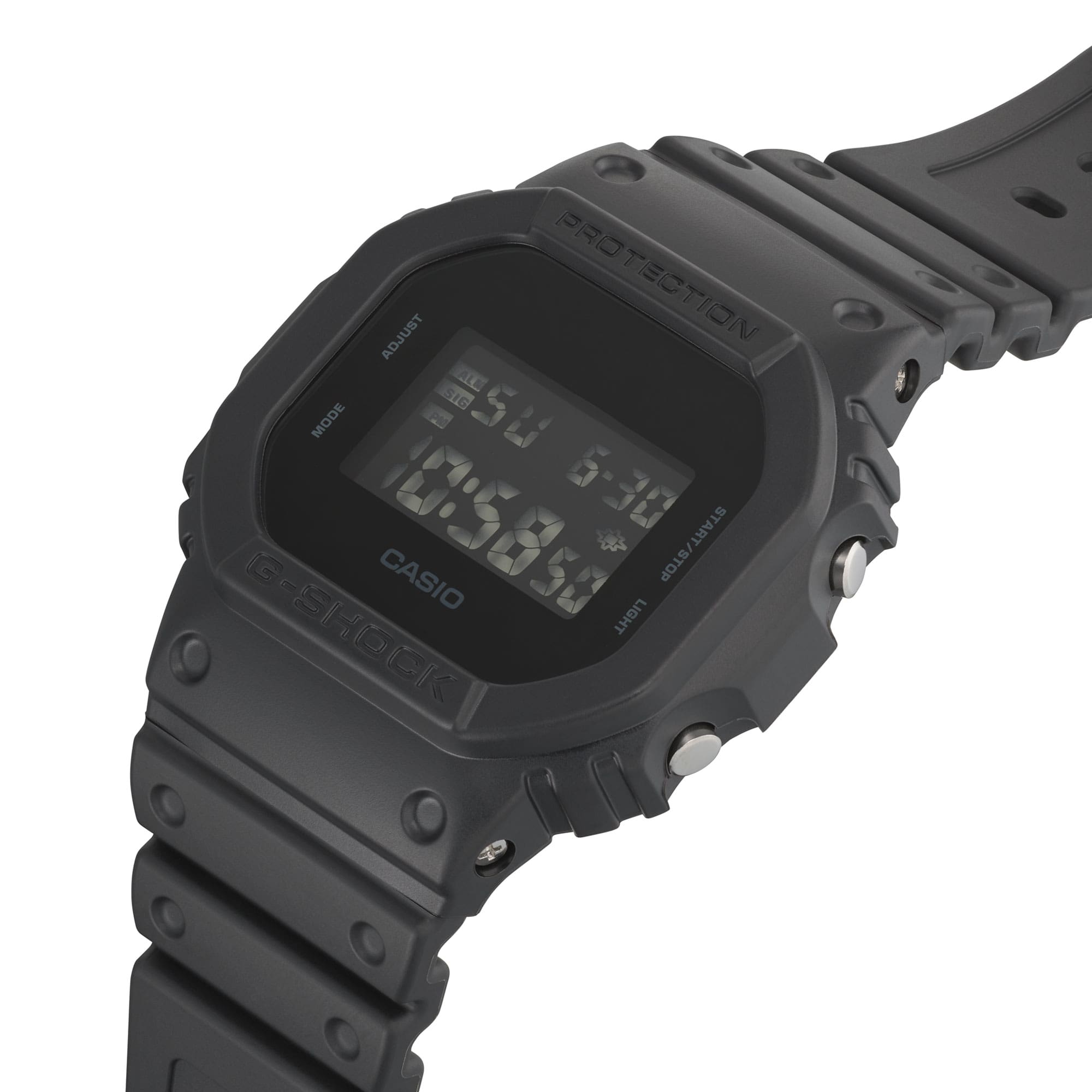
Mil-Spec Watch Testing
The G-SHOCK DW5600UBB-1 was subjected to a laboratory test program conducted by Element, an independent testing and certification laboratory. The DW5600UBB-1 military watch was assessed across selected MIL-STD-810 environmental and dynamics tests covering weather, water, temperature, dust, vibration, shock, and low pressure. Discover more G-SHOCK military watches designed for demanding conditions.

The environmental tests this model underwent provide further validation that G-SHOCK models are able to withstand the harsh conditions the tests are designed to simulate.
*Although the G-SHOCK DW5600UBB-1 underwent the same tests, the watch in the video is the MUDMASTER GGB100XM-1A.
The G-SHOCK DW5600UBB-1 was one of five G-SHOCK models included in a 12-test program simulating dynamic environmental conditions. The DW5600UBB-1 faced tests in low pressure altitude, blowing rain, salt fog, freeze/thaw, random vibration, mechanical shock, high temperature, low temperature, immersion, aggravated humidity, solar radiation, and blowing dust.
After each procedure, Element lab technicians recorded “no physical or visual damage” to the tested watches. Take a closer look at the conditions used to evaluate this tough G-SHOCK DW5600 military watch and discover why G-SHOCK has some of the toughest watches on the planet.
Blowing rain, immersion, salt fog, aggravated humidity, and freeze/thaw simulations tested the DW5600UBB-1 with water, moisture, and salt exposure, pitting this DW5600 series military watch against various simulated weather conditions. Built for the outdoors, these conditions align naturally with the shock-resistant structure and 200-meter (wr 20bar) water resistance of the DW5600UBB-1. With a five-year battery, the test results prove the DW5600UBB-1 is a reliable and dependable military watch year after year.
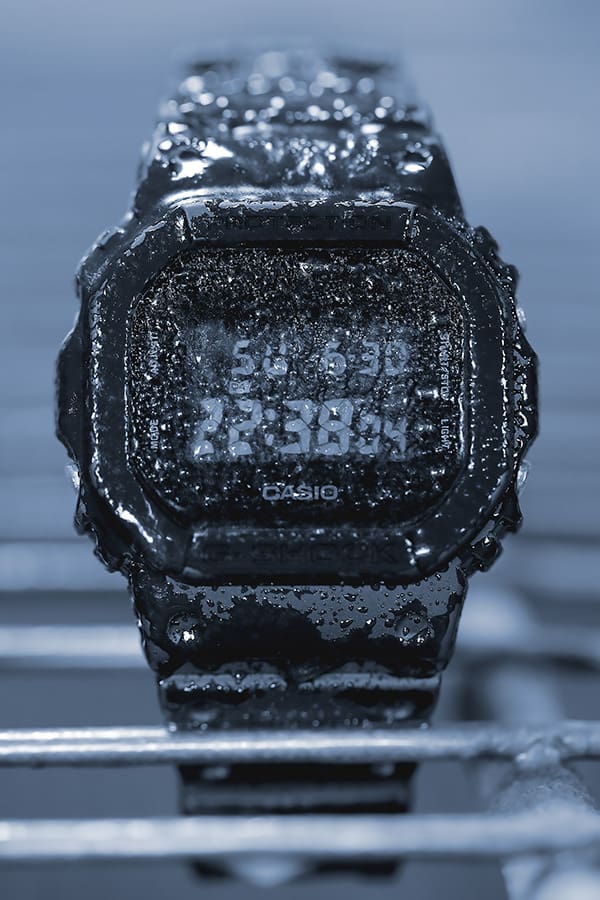
The DW5600UBB-1 mil-spec watch in a freeze/thaw simulation.
The freeze/thaw test demonstrates the reliability of the DW5600 series design. During freeze/thaw testing, the watch was repeatedly cycled from 22°C (72°F) down to -11°C (12°F), thawed at 6.5°C (44°F), and then returned to freezing conditions. Generally, repeated freezing and thawing can expose weakness in a watch, while moisture or condensation can build up during each cycle and compromise watch functions due to those weaknesses. The G-SHOCK DW5600UBB-1 military watch demonstrated no such issue, passing the MIL-STD-810 freeze/thaw test without showing signs of physical or visual damage. As shown in the image, the reverse LCD is still legible amidst the moisture that built up on the scratch-resistant mineral glass, and this mil-spec watch continued to function as designed.
During the blowing rain test, the DW5600UBB-1 endured sustained wind speeds of 40 MPH while pelted with water at the incredible rate of 4 inches of rain/hour. During the blast of blowing rain, the watch remained in full operation. This G-SHOCK tough military watch passed the test with the standardized response of "no physical or visual damage." With water resistance of 200 meters, Casio didn't expect anything less than success for the DW5600UBB-1 in simulated blowing rain.
The salt fog test is another punishing assessment of G-SHOCK durable design. A salt fog test assesses corrosion vulnerability, which can identify weaknesses from the corrosive capabilities of salt deposits in coastal and marine environments. The salt fog test is a simulation of the possible corrosion found in these environments:
Element labs tested the DW5600UBB-1 under MIL-STD-810G by exposing the military watch to a 95°F, roughly 5% salt-mist environment for two 24- hour cycles. Each exposure was followed by a 24-hour drying period, simulating the repeated wet-and-dry salt exposure that can occur in coastal and marine conditions. The watch remained powered and operational during testing, and Element labs reported no visible damage or corrosion after the full test.
Built to take on salt-sprayed shores, wave-pounded ship decks, and whatever else coastal and marine elements deliver, the DW5600UBB-1 military watch emerged from MIL-STD-810G salt fog testing with no visible corrosion or damage.
This achievement is made possible by over 40 years of expert G-SHOCK design and craftsmanship. The DW5600UBB-1 includes shock and 200m water resistance with easy-access timekeeping and sensor buttons that are themselves protected by the case design, allowing the DW5600UBB-1 to endure the elements as only a G-SHOCK military watch can do.
High- and low-temperature testing, solar-radiation heat loading, and blowing-dust procedures reflected environmental conditions that can challenge outdoor gear.
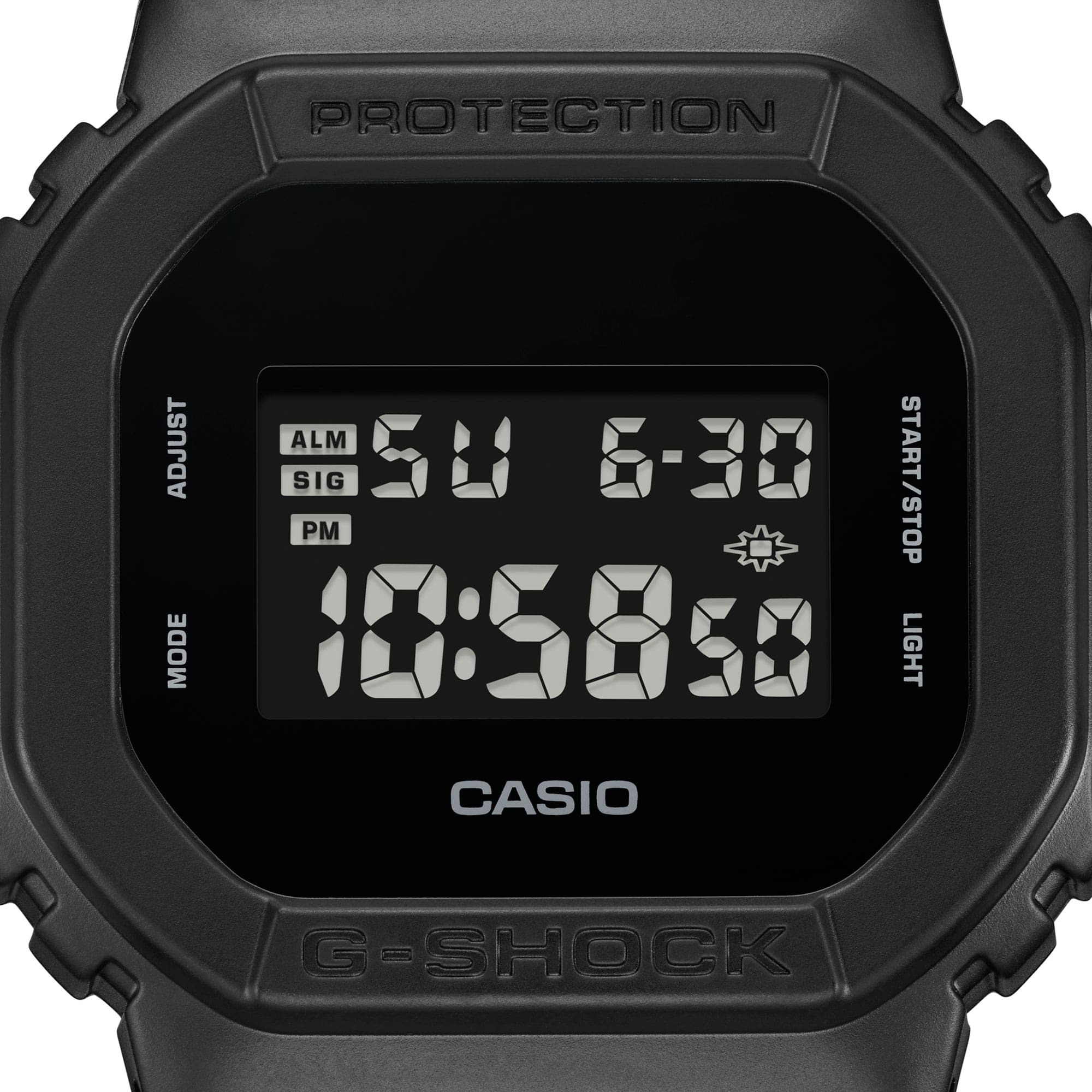
To simulate harsh sun exposure, the DW5600UBB-1 underwent a MIL-STD-810G solar-radiation heat-loading test using a calibrated artificial-sunlight array inside a climate-controlled chamber. Across three 24-hour cycles, the chamber temperature rose from roughly 32°C (90°F) to 48°C (118°F) as the light intensity was gradually increased and reduced to recreate sustained outdoor heat and sunlight exposure. During the test, the mission-critical stopwatch, timer, calendar, and alarm functions continued, as the watch was fully operational. Reliable in extreme environmental conditions, the G-SHOCK DW5600UBB-1 is a military watch with a dark, sleek look and durable performance.
The reverse LCD display complements the minimalist black display, and the blackout effect mirrors covert operations or secretive deployments. With a 5-year battery, the DW5600UBB-1 is reliable year after year, but when battery changes are necessary, the four screws in the case back—characteristic of the DW5600 series—allow for easy battery access.
Explore the resistance features of the DW5600UBB-1 that matter most to military operations, law enforcement, and rugged adventures.
*The watch in the video is the DW5600BB-1. The mil-spec tested watch is the DW5600UBB-1, which has an LED backlight (Super Illuminator).
All of these features were put to the test against high- and low-temperature testing, solar-radiation heat loading, and blowing-dust. Passing these tests with no physical or visual damage, the DW5600UBB-1 is a testament to the 40-year history of absolute toughness and reliability in the G-SHOCK 5000/5600 series.
Different kinds of force call for different types of testing. Random vibration, mechanical shock, and low-pressure altitude procedures assessed G-SHOCK military watches under dynamic movement, impact, and reduced-pressure conditions. Together, these procedures add another dimension to the G-SHOCK reputation for shock-resistant design.
The random vibration test used an electrodynamic vibration test system to expose the DW5600UBB-1 to a broad spectrum of vibration from 20 to 2,000 Hz at 7.7 Grms, a measure of the overall intensity of the shaking. Each watch experienced one hour of vibration along all three axes, testing it against motion from multiple directions. Intense vibrations are expected in military or law enforcement field operations, and the DW5600UBB-1 passed the MIL-STD-810 vibration testing with no physical or visual damage.
Shock and vibration resistance requires shock absorption, which is easier to design and implement in a large watch case. However, the DW5600UBB-1 is only 13.4mm thick, making shock absorption particularly challenging.
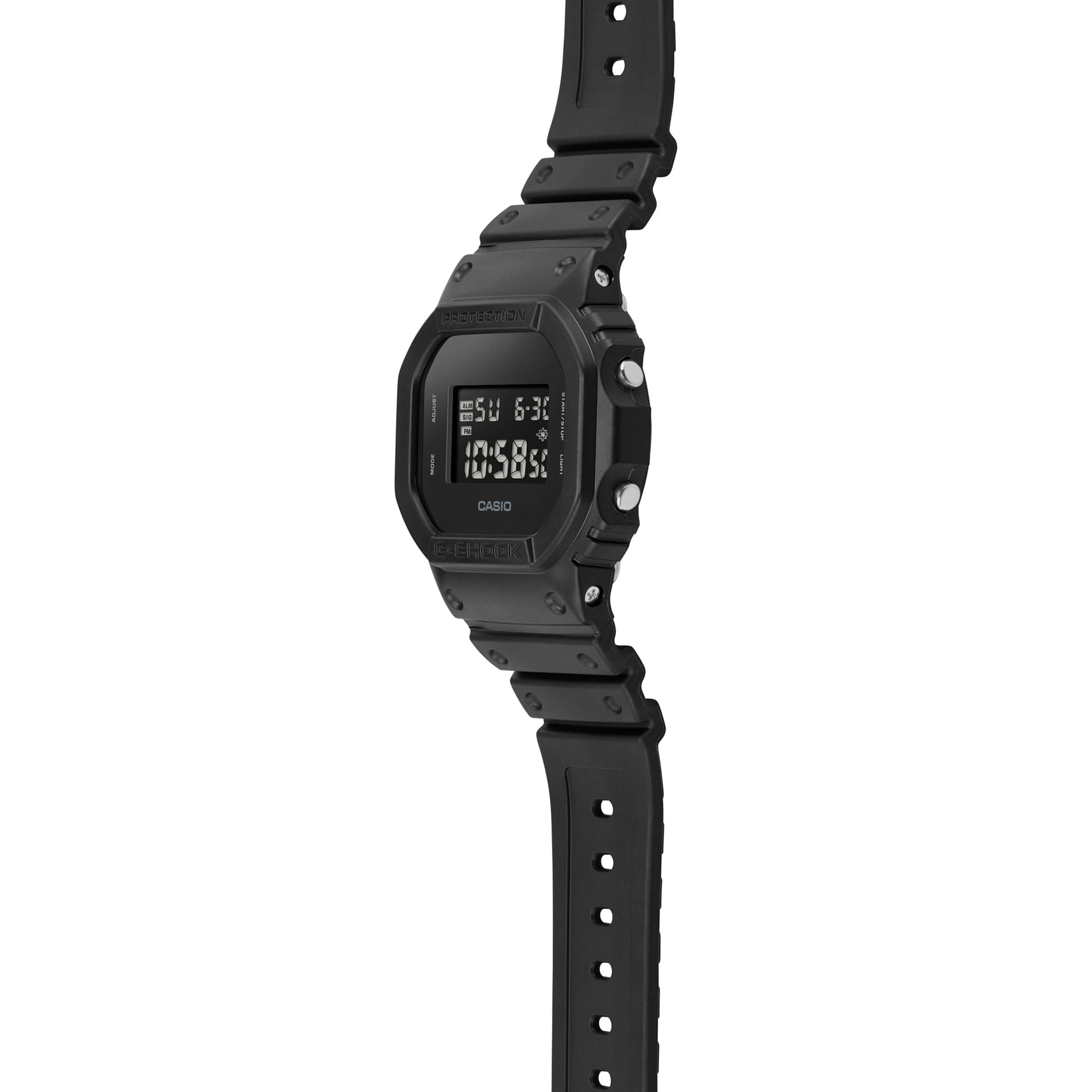
The DW5600UBB-1 passed the random vibration test due to the signature G-SHOCK design of placing the watch module inside a hollow case structure, affording incredible shock absorption in a thin watch case.
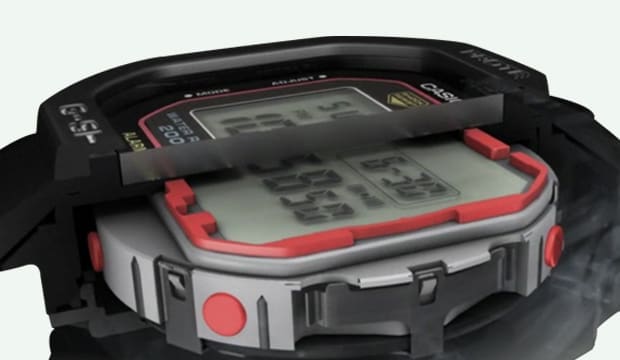
*Cross-section of the hollow case structure of the DW-5000C, the original G-SHOCK square and ancestor of the DW5600UBB-1.
The high-altitude testing consisted of a chamber test where the air temperature was kept at a stable 74 degrees while the air pressure was reduced to 8.29 PSIA (Pounds Per Square Inch Absolute). That's a simulation of about 15,000 feet above sea level, and the G-SHOCK military watch was tested in that environment for about an hour and a half. During that time, the G-SHOCK DW5600UBB-1 continued functioning throughout the test and received the standardized test result of "no physical or visual damage."
Watch performance at high altitude is essential for military operations across the globe. The necessity for a military watch to perform at high altitudes is evident by the elevation of select locations that were the site of multinational coalition operations.
See the DW5600 in action during rigorous movement.
In the mechanical shock test, the DW5600UBB-1 was strapped to a shock tower that rose to a height of about 3 meters (almost 10 feet) before it dropped, sending shock waves through the military watch as it was subjected to a high-intensity impact. The watch was dropped 18 times in this fashion, putting its shock resistance to the test. G-SHOCK watches are known for legendary shock protection, and this G-SHOCK passed the test with a lab result that stated, "No damage was noted during testing." The test results are in: the absolute toughness of the DW5600UBB-1 watch is for those whose daily routines may include rugged travel, outdoor recreation, military operations, and police patrols.


Shop G-SHOCK tactical watches built with shock and water resistance for extreme conditions.
Top Military Watches | Compass | Non-Bluetooth | Long Battery Life | Additional | Why G-SHOCK? | FAQ